
MacGyvering at Sea: Creative Fixes Every Boater Should Know
November 11th, 2025 by team
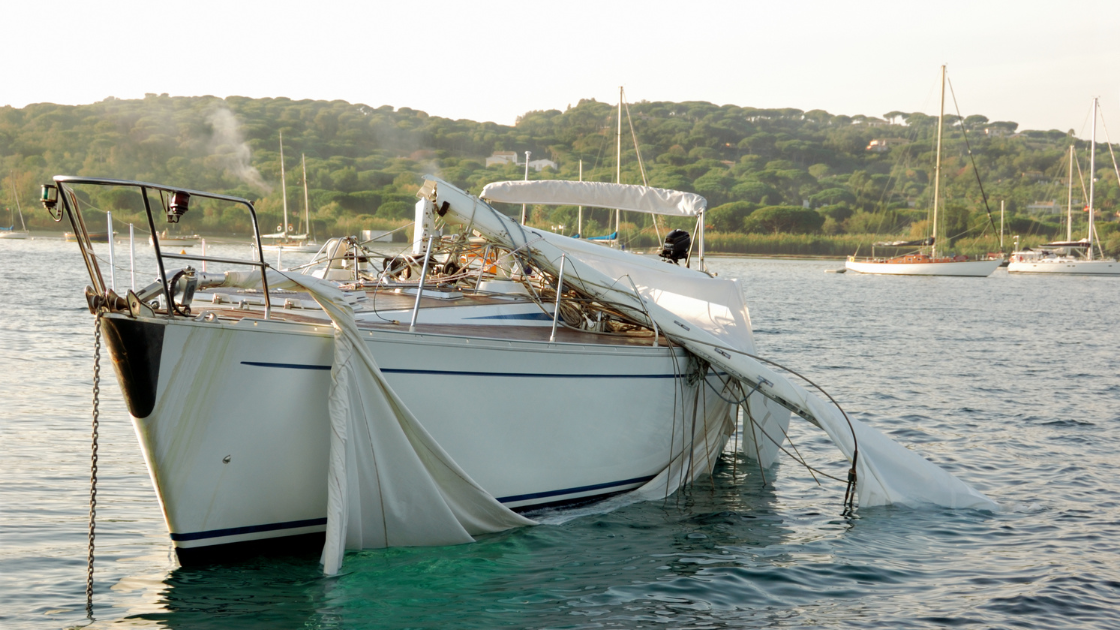
by B.J. Porter (Contributing Editor)
Though I was never in the military or a marine, I’m going to borrow one of my favorite aphorisms from U.S. Marine Corps: Improvise, Adapt, Overcome. Words to live by if you’re a boater, too.
When you’re on a boat, you may not always have the correct tools or proper spares if something goes wrong. You may not be able to repair something when it breaks. But quick thinking and improvisation can still get you home and to safety.
Now, I can’t cover every contingency, and that’s not my goal. The point is to help you think creatively when you face problems or need help.
So, I will offer real-world examples of things we’ve done on the water (and on-the-fly) to get out of some pickles or make our lives easier. And hopefully, these get you thinking about solving problems on your boat to save your weekend or vacation, or just make your life a little easier.
WARNING: The things we’re discussing are solutions out of necessity. Most of what I’m suggesting here is not a normal means of operating; these are short-term fixes to get you back and keep you going. Always go for a safe and proper repair as soon as you can.
Broken windlass (or winch)
Our last boat had a 300′ all-chain rode and a one hundred pound anchor. That 13mm (½”) chain weighed a couple of pounds per foot. There was no way to get off the bottom without a windlass, preferably a powerful electric one.
When the windlass didn’t work…
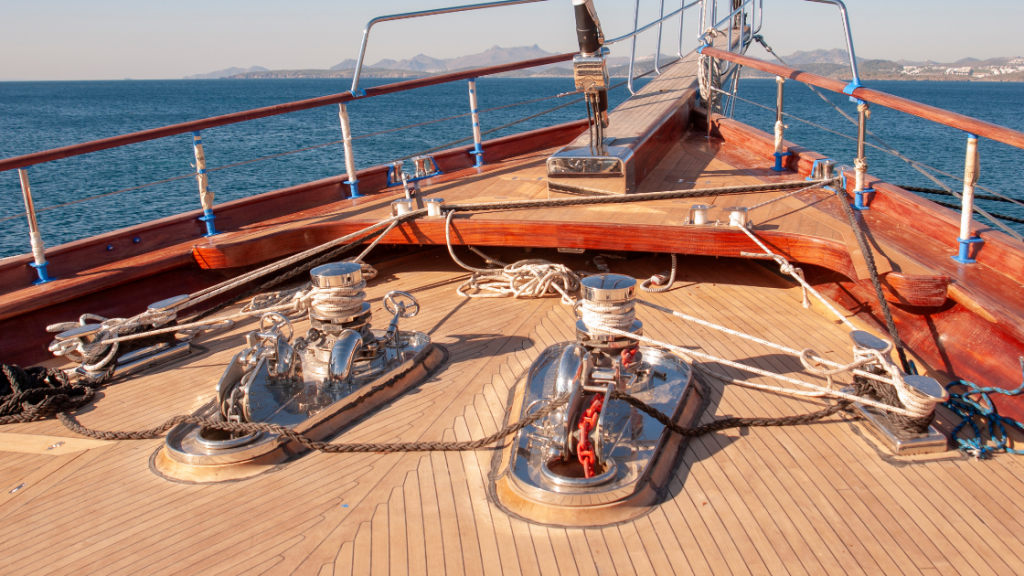
And one fine weekend, we got the chain fouled up and jammed under the windlass so badly it couldn’t come in. In trying to sort it, we blew the windlass fuse. But we needed to leave, and with the chain tangled below, we couldn’t crank the windlass manually like you’re supposed to if it won’t run. The load on the chain was keeping everything too tight to untangle, so we were at an impasse.
Our solution was to use the primary winches. On our boat they were electric, but this would work with manual winches as well.
We took the end of a jib sheet and tied it to one of our chain snubbers with a sheet bend. Then we attached the snubber to the chain as far forward as we could and cranked in the winch while motoring the boat forward to take the load off the rode. When the sheet bend got as far as it could, we secured the anchor rode to a cleat with our second snubber, then reset the first snubber/sheet line far down the chain again.
Working this way, we got the chain rode and anchor back on the boat about 20-25′ at a time. But once we got it on the boat, all the tension was off, and we could free the below-deck tangles and make it all right again once we replaced the blown fuse.
Diverting heavy loads
Whether it’s your windlass or one of your winches, if one of your mechanical advantage devices seizes up, you can usually use another one to solve the problem temporarily. If a winch stops working, you can still use it as a line guide to send the line to a working winch to take on the load.
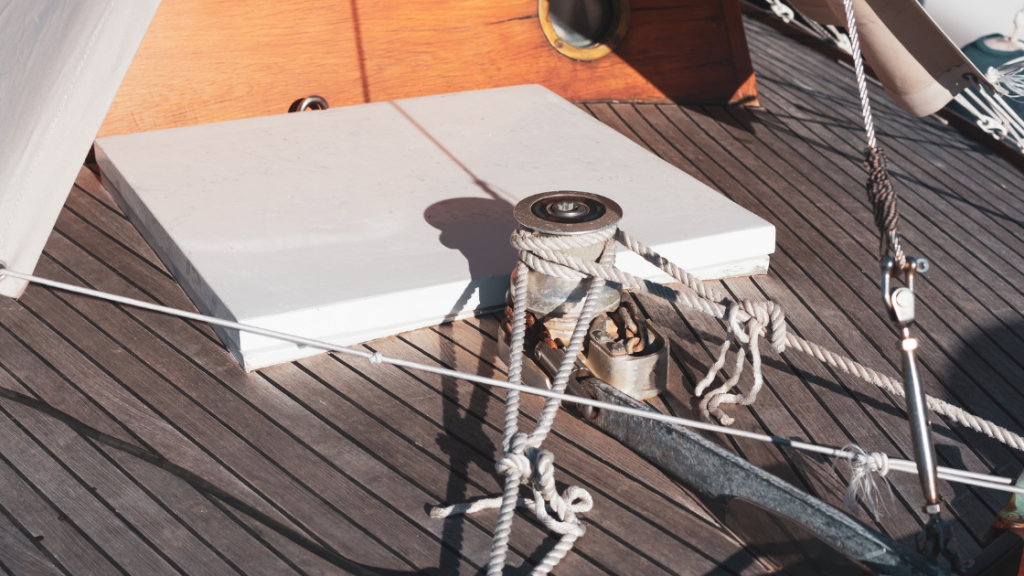
A few things to pay attention to:
- Friction and load paths. Make sure whatever line you’re diverting isn’t wrapping or snagging on something because it’s not moving through the normal turning blocks and paths. You don’t want to chafe the line or break the thing it’s touching.
- The working loads of the backup gear need to be up to the task. Our giant primary winches had no trouble handling the load of the anchor and rode. But I wouldn’t have wanted to try that with a small winch mounted on the mast, for example.
- Don’t run sharp angles in your lines as you re-route loads. Avoid angles less than 90 degrees. It puts a lot more load on the line and the point you’re turning around.
Broken Rigging
Having a piece of standing rigging break is pretty scary and takes quick thought and action to keep the rig on the boat. On one of our boats, we lost our headstay after a race when overenthusiastic but under-skilled crew sawed through the headstay with an over tightened wire-rope halyard. The furler crashed down to the deck, but no one was hurt. On our cruising boat, one of our backstay insulators separated just after dawn when we were sailing between the BVIs and St. Martin. That time it was the backstay-mounted radar that almost fell on my head.
Yikes.
Fortunately, I learned from the first incident.
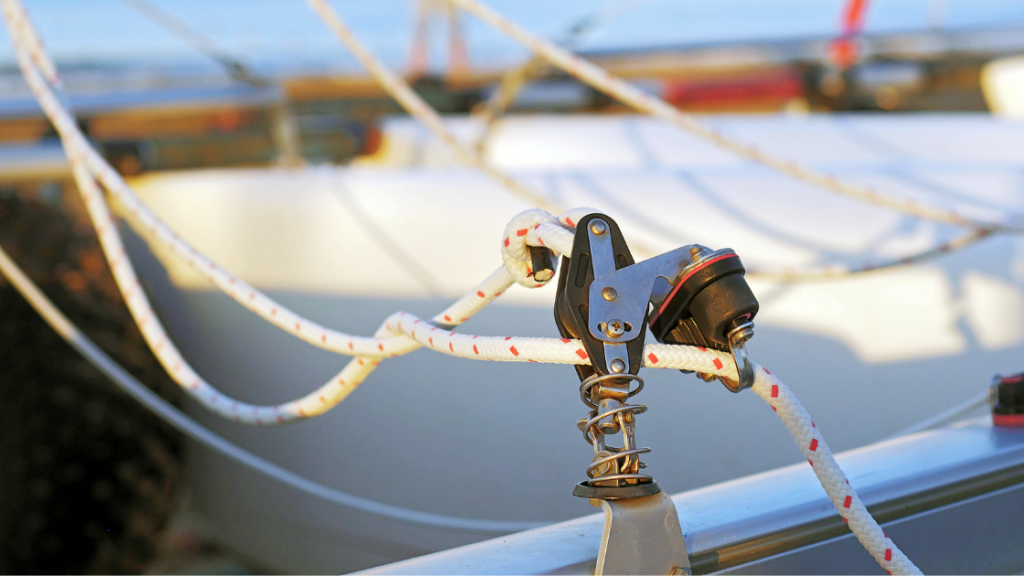
Your boat has a lot of extra temporary standing rigging right there for the taking – your halyards and topping lifts. Quick thinking by the more experienced crew in the headstay incident got a halyard secured to the deck immediately. When tightened down, it gave enough support to stop any back-and-forth motion that might damage the rig.
When our backstay came down, the first thing we did was to secure a halyard back to a point near the stern and crank it down tight. It’s the same solution – get something from the top of the mast tied to the deck and tightened to replace the load that was on the broken rigging to prevent any extra damage or movement.
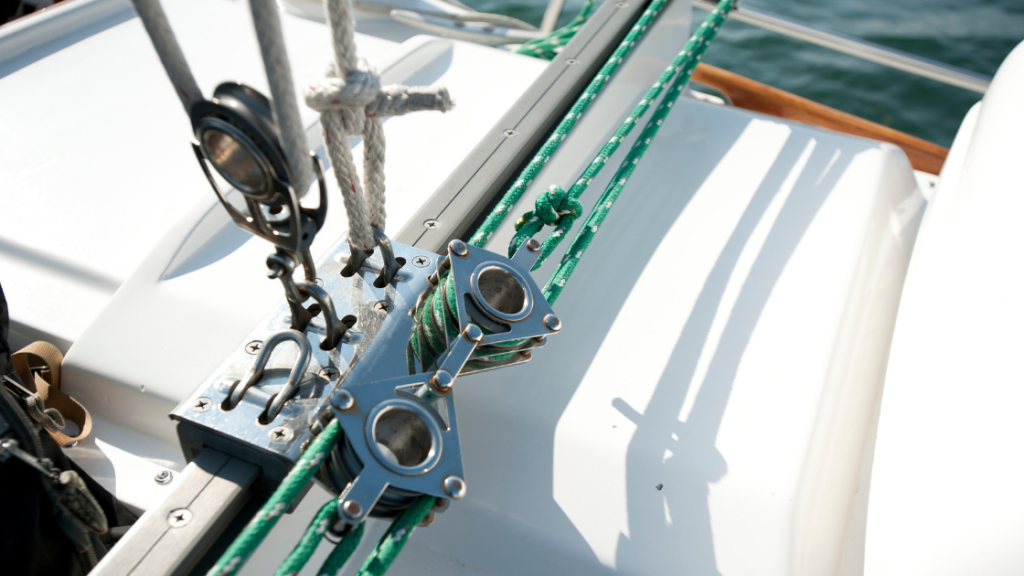
On that boat, we also had checkstays we put on after we secured the halyard, just for added safety. We normally needed them only for the staysail, but we weren’t about to take any chances.
Seawater Leaks
Water can come into the boat in so many ways, it’s hard to prepare for all of them. For the most obvious ones – through hull and hose failures, of course you should have plugs installed and some reliable bilge pumps.
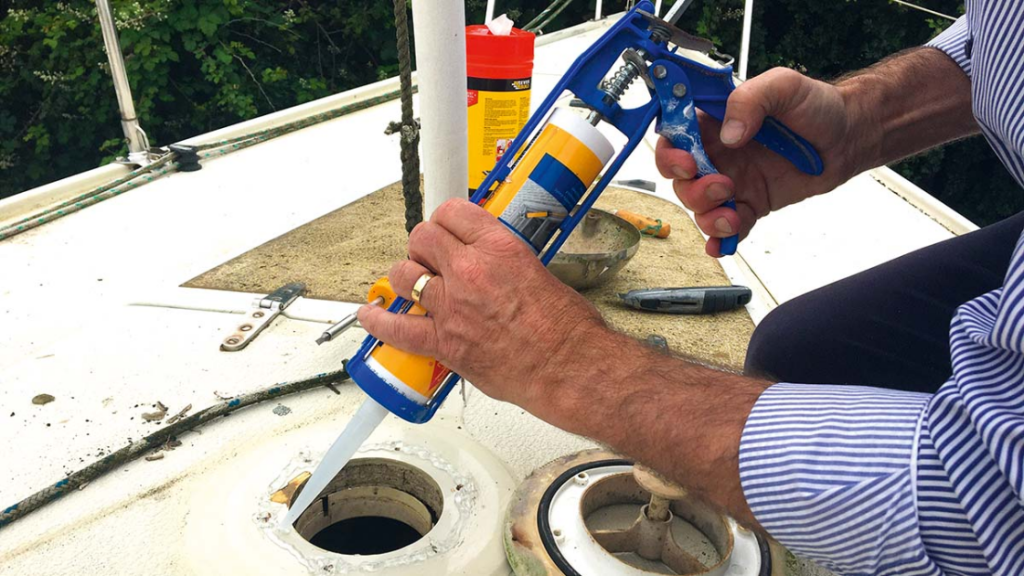
But what about other types of leaks? We’ve had water come in from things like worn seals on engine raw water pumps and loose connections and worn fittings. But the worst was when the transmission oil cooler on the engine started leaking water halfway between Tahiti and New Zealand. It was fine as long as the engine wasn’t running, but we needed the engine.
For that problem, we improvised a patch with JB Weld, a super strong, heat resistant, two-part epoxy product designed to make “cold welds” between pieces of metal. With the engine off and cooled, I carefully built up a patch over the leaking area and let it cure.
The leaking raw water pump on our generator was a problem because I was on a remote atoll in French Polynesia and didn’t have a spare pump, only a rebuild kit. And I had no way to press out the seals and replace them. Then I read about lightly tapping out the seals and getting them back in using a socket from my socket wrenches. It worked, and held until we reached Tahiti and found a machine shop with a proper press.
Stopping major seawater leaks is a topic in itself, and there are many improvised solutions, from stuffing pillows into holes to wrapping the hull with a sail. For offshore sailors, putting together a patch kit and having a plan is important. But sometimes the ocean finds another way in, and you may need to try something different.
Engine, dinghy, and other lifts
The other day I was chatting with a sailor about dinghies, and he was complaining about what a pain in the neck it was to take the engine off the dinghy and stow it on board.
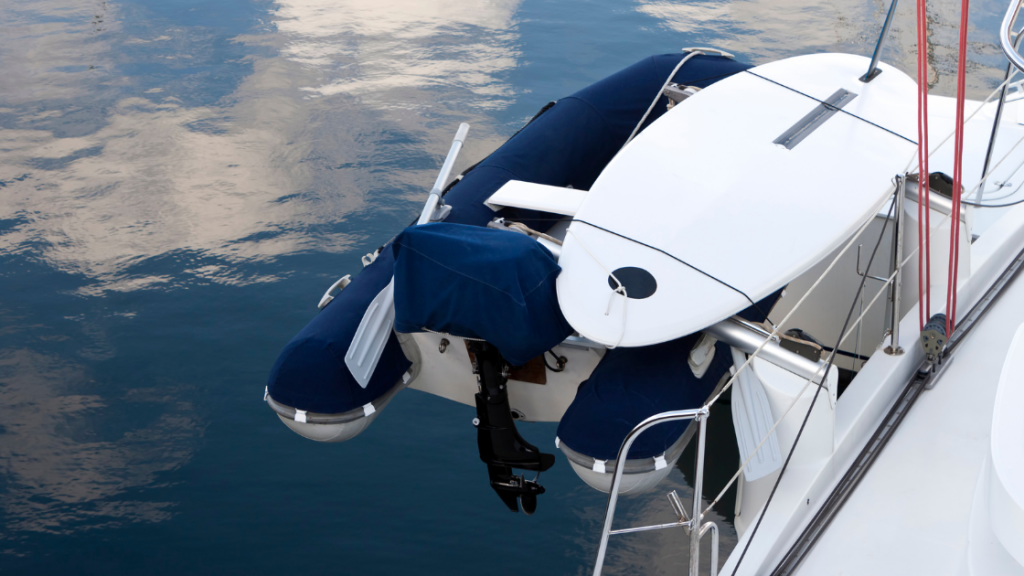
Hmm…we always used a halyard with a winch, and it came right up. The biggest challenge was keeping things from swinging around and banging against the hull on the way up. When lifting dinghies for stowing up the bow, we used a whisker pole to keep them off the boat.
It’s easy to forget that you have a crane strapped on the middle of your boat, but halyards and topping lifts can be tremendous tools for getting heavy or awkward things on and off the boat. For an outboard or dinghy, all it takes is some kind of harness with a lifting point. You can improvise this with spare lines, or buy a pre-made and mount it permanently.
You may have to find the best combination for you – what worked for a dinghy engine on two boats (the main halyard) didn’t work on the boat with in-mast furling. Our spinnaker halyard was long enough to route back to the primary winches, so that was our lift for everything forward or the spreaders.
That Pesky Kill Switch Lanyard
Ever lose your kill-switch lanyard? We had one stolen off our dinghy while it sat at a dinghy dock and we were walking around town. I rarely took it with me because I was worried I’d accidentally drag it out of my pocket in town and lose it. So that worked out well.
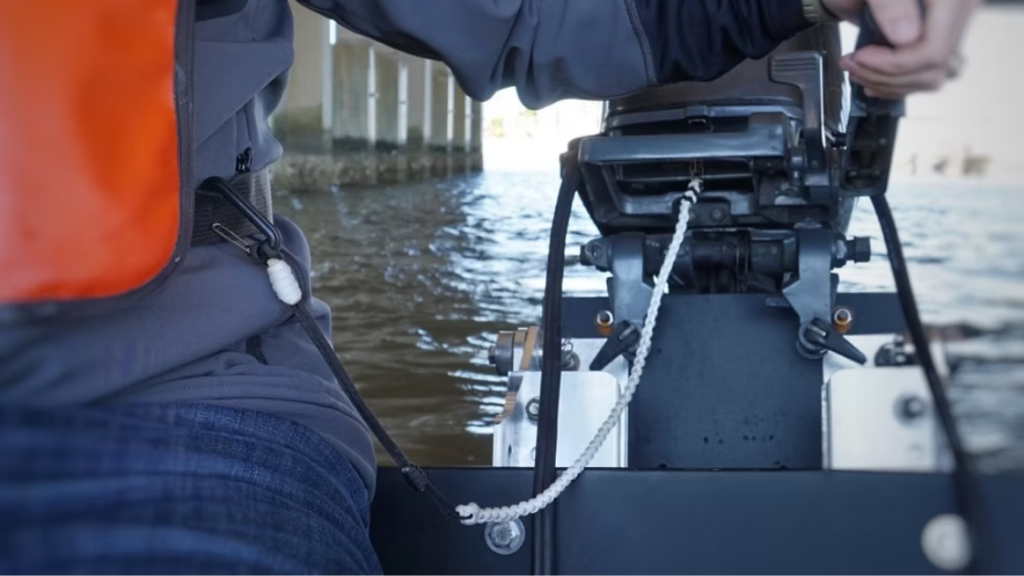
Your kill switch has to be pulled out to run the engine, and it won’t start or run without that little hunk of plastic in there. To get back to the boat, I pinched it really hard and kept it pulled out with my fingers while awkwardly steering with the other hand. But we didn’t have a spare on the boat either. I needed to find a short-term solution to let us use the dinghy until we could get a new one from a chandlery special order.
Over the years with missing kill switch lanyards, I’ve used needle-nosed pliers and small wrenches to substitute. The best was a small needle-nosed vice-grip, because you didn’t need to hold it in place.
In a similar vein, you can improvise other quick repairs as needed to just get you through. Those needle-nosed vice grips also made a pretty good clutch lever when I broke ours and was waiting for a replacement. Of course, I had to take it off the shower knob control, where it sat while we were trying to find a replacement knob after the last one broke…
Creative Inspiration
The point of all of this is to get you thinking – how can I solve my problem with what I have right here, right now? If it’s a minor or annoying issue, you really don’t want to call for a tow or rescue, right? If you saw the movie Apollo 13, you know what I’m talking about. There’s one scene where the ground control team spreads out a list of everything they have on board the space craft to devise a solution to their problem, because that’s all they had up there to work with.
On a well-equipped boat, you will have lots of things to help you solve problems, sometimes in ways you didn’t expect. While it’s true that if you only have a hammer, everything looks like a nail…it’s also true that if you need a hammer, there are a lot of ways to pound that nail in without one.
One important takeaway is to talk about what you might do. We learned enough from our first broken stay so we knew what to do about the next one. We talked it through afterwards to learn how to handle it better or prevent it.
But we also liked to talk “what ifs” about how we might fix certain problems and scenarios, just hypothetically. Thinking about it and talking about it before it comes up is a great way to have some idea of what you can do before it all hits the fan, as well as what else you might carry on board, just in case.
I’d love to hear from you about some of your creative jury-rigs and fixes in the comments! Let’s learn from each other.

February 05, 2026 at 3:43 pm, Susan Taylor said:
The ultimate MacGyver I witnessed was the skipper using a huge wrench, a sledge hammer, and a scuba tank with altered fittings to repair two flat tires on a rental car. We were supposed to pick up crew at the airport for a Panama Canal crossing and were in an area where we couldn’t call anyone for help. He saw that the rims on the two right-hand tires had bent when he hit a pothole so he hitchhiked back to the boat, grabbed some things, came back, bent the rims back, inflated the tires, and got us back on the road. The fix held up perfectly for the 2-hour round trip and beyond.