
Ask a Cruiser: Your Most Common Questions, Answered (Part II)
November 11th, 2025 by team
by B.J. Porter (Contributing Editor)
Last month we discussed some of the most common questions we get when people learn my wife and I cruised full time for many years. Since that list quickly got too long, we split it into two parts. So here are some more questions and answers.
Read Ask a Cruiser: Your Most Common Questions, Answered (Part I)
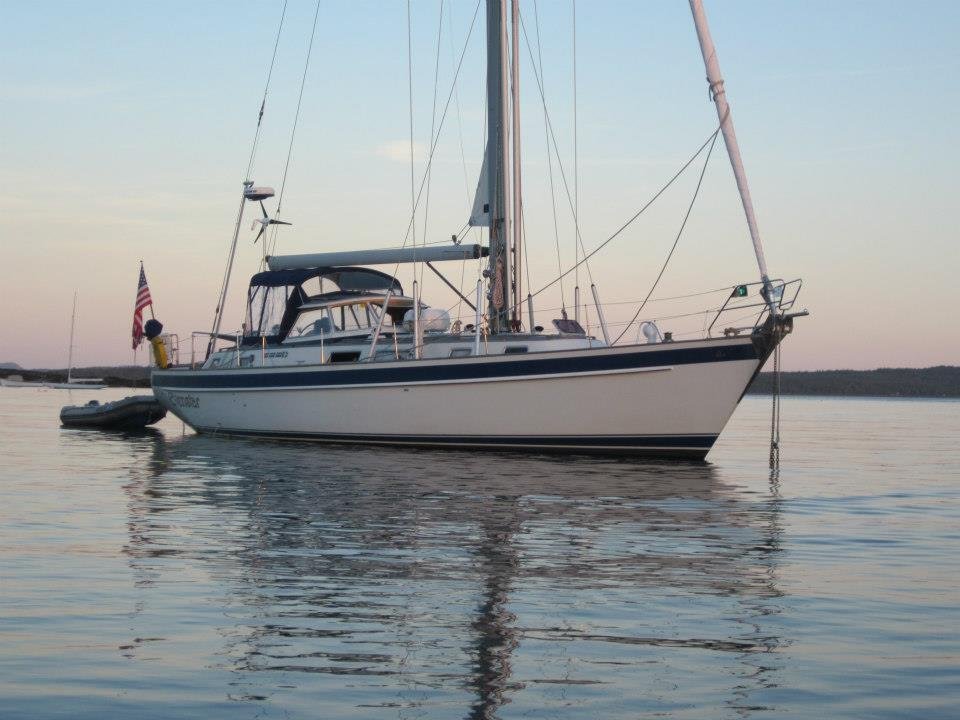
If anyone has further questions, please speak up in the comments – I read them. And for the comment from last month, the boat was a 1997 Hallberg-Rassy 53. Follow the link for all the information you could want about her and lots of pictures, inside and out.
The Sailing
Even though you live on board full time and sail to move the boat from place to place, it surprises most people that we didn’t sail incredible amounts every year. Passages are long, but they’re reasonably fast for the distance covered. In the year we covered the most water traveling from Panama to New Zealand, our major passages only took up about 41 days. We spent around sixty or seventy days moving the boat, and that was our busiest travel year.
We always had other sailing days, but those were mostly day trips or simple overnights. Once you get somewhere, you usually stay in one place for a while. You may shift harbors or move up and down the coast, but spending weeks in one spot is entirely normal.
How far from land did you get/what was your longest trip?
Our longest passage was from Isla Isabela in the Galapagos to Nuka Hiva in the Marquesas, in French Polynesia. The trip was just over 3,000 nm (nautical miles), and took us sixteen days and a few hours. At one point we were about 1,500 miles from any land.
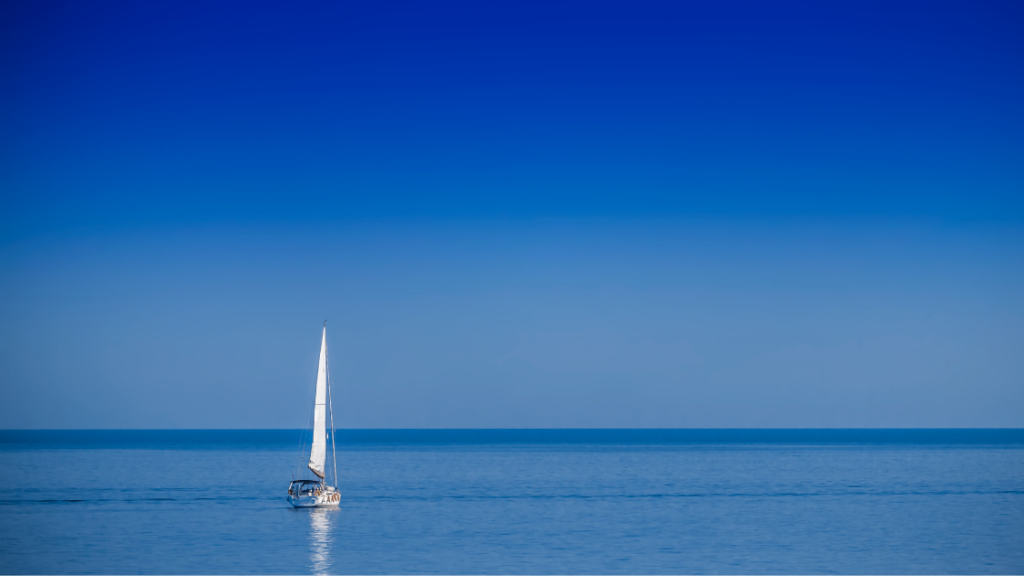
When answering this question, I usually point out that the land-based helicopter rescue range is about 200 miles. So once you’re outside that limit, your rescue options are few. Transoceanic shipping is usually your closest help.
Other long passages included (distances and times approximated):
- Tahiti to Opua, NZ (2,200 nm, sixteen very annoying days)
- Hampton, VA to Tortola, USVI (1,500 nm, about nine days)
- Panama to the Galapagos (900 nm, seven days)
- Sydney, AUS to Picton, NZ (1,100 nm, nine days)
- Opua, NZ to Fiji, Fiji back to Opua (1,000nm, 6-7 days)
- Opua, NZ to Noumea, New Caledonia (1,100 nm, seven days)
- New Caledonia to Brisbane, AUS (900nm, six days)
Times varied with conditions and weather.
For example, the 2,200 nm trip from Tahiti to NZ took about the same time as the 3,000 nm from the Galapagos to Nuka Hiva. The trip to Nuka Hiva was 3,008 miles on trade winds with mild seas, broad reaching on one tack for about 3,000 of those miles. But sailing to New Zealand was mostly upwind in sloppy seas, with a badly repaired mainsail we couldn’t trim for good pointing, while having constant trouble with the generator and engine!
What did you do at night on long passages? Do you stop?
Most people don’t consider that you need to keep watch on a sailboat twenty-four hours a day. This is an important offshore sailing safety rule; you don’t want to get surprised by another vessel or unexpected weather. But you can’t anchor in water two miles deep, though I suppose you could heave to, which we did a few times.
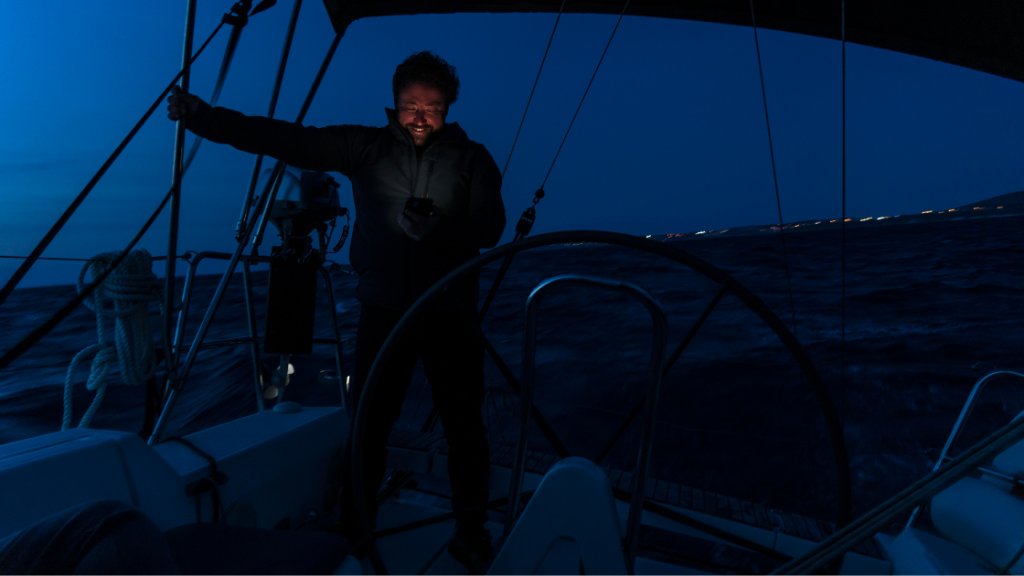
So no, we don’t stop. We keep watch all night, with everyone on board taking a shift, even the kids.
A question about solo sailors often follows this up, and how they keep watch and sleep. And the answer is “not as well.” Since they need to maintain a short sleep cycle, they will use tools like proximity alarms, which look for radar contacts, so they can grab a little needed rest.
The Lifestyle
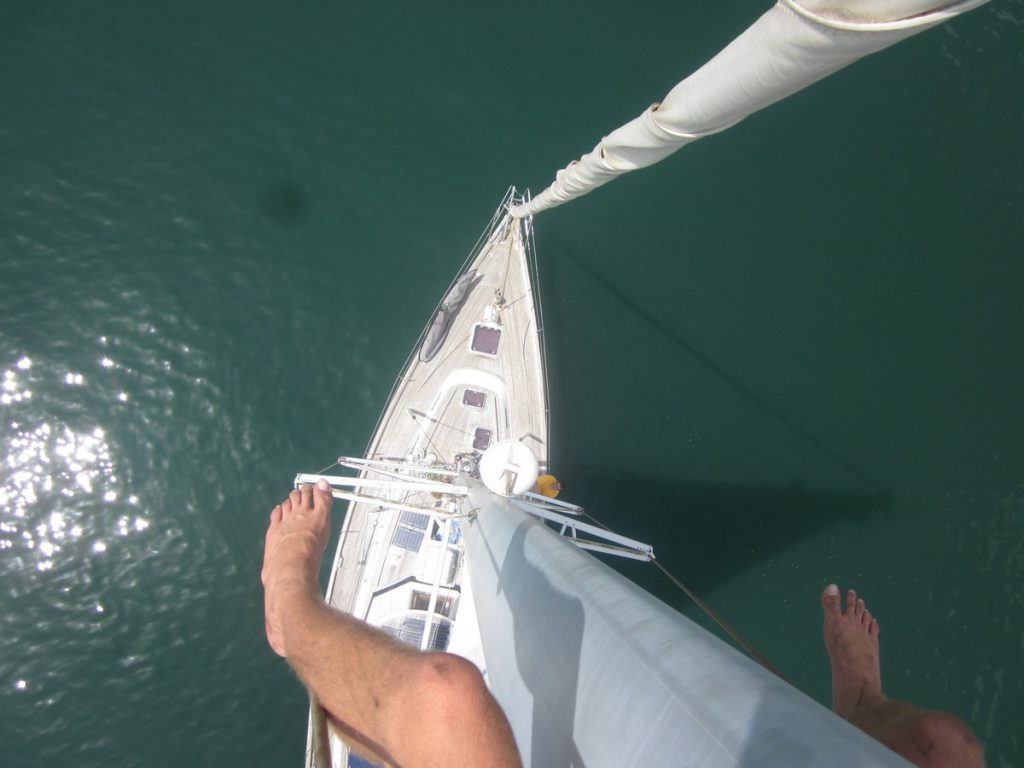
Life on a boat, even a good-sized boat (ours was a 53′ monohull), is radically different from life on shore. Things you never think about in a house sometimes take planning and coordination on a boat. Grocery shopping can be a full-day commitment, and who thinks about where the power comes from when you flip a light switch? Never mind what happens when you flush the commode.
What did you do about food?
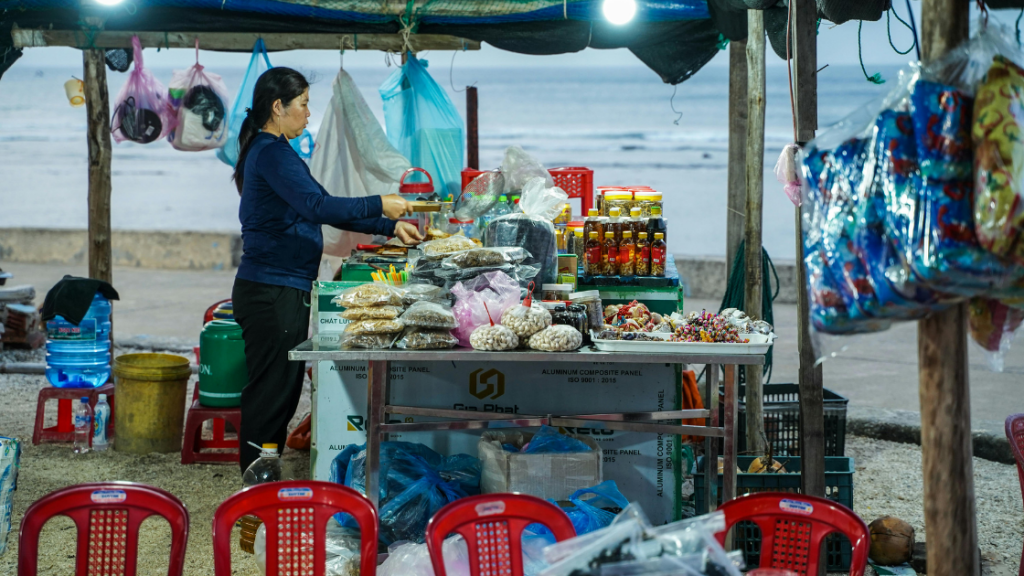
Everywhere there are people, there is food. It may not be what you are expecting, or even what you want, but you will not starve once you’ve gotten where you’re going. And while there’s a good chance you can find something you want in a remote place, it will often cost you a lot more than you want to pay. So, it’s good to be prepared.
Passage making is a little different, since you are out of range of supplies and groceries. And that took planning, and a lot of storage. We had a freezer on board, and we often shopped for the duration before long passages and times away from proper supermarkets. Before long passages, we packed the freezer with meats, the spaces under the floorboards with dry and canned goods, and hanging nets with fresh fruits and vegetables.
But once we got somewhere, exploring the markets, new cuisines, and local foods was always a fun part of the experience.
How did you afford it?
It’s easy to say planning, hard work, good income-producing investments, and some good luck. But it wouldn’t be honest to ignore that having a hardworking and successful physician in the family wasn’t a factor. A high income before cruising obviously gives you opportunities to save and invest that aren’t as available for a family on a more modest income.
But that doesn’t mean it can’t happen; many cruise on modest terms. We did some things the way we did because we could afford to, like the boat we chose. An older, smaller, and slower boat could also have safely made the trip. We met many cruisers out there spending less than we did. And of course, we met many spending a lot more…
As the departure date approached in the final years, we made a lot of changes in our habits to cut spending and up our savings to better our pre-cruising position. I did almost all the boat upgrade work myself, for example, saving thousands of dollars in labor costs while also ensuring I knew the boat very well. We also shifted spending patterns, making less expensive choices in shopping, eliminating some discretionary expenses, and keeping a very sharp eye on spending and income.
Once we started cruising, we worked to manage costs because we knew the cruising kitty was adequate but not infinite. And along the way we had a few financial setbacks that we weathered (like a house that took years to sell for less than expected after flooding damage) and some windfalls.
But we started planning years in advance, and I created a very detailed financial model to see if it could work. My thinking was, “If it can’t work in theory, it won’t work in reality. But if it does work in theory, at least we have a chance for it to work out for real.”
Did you homeschool your kids?
Our kids were 12 and 15 when we left, and entering grades 7 and 10, respectively. So yes, we homeschooled. We used a remote learning curriculum from an accredited school, where actual teachers graded their work. This worked out very well since they got legitimate high school diplomas, so there was no need for a GED or separate proofs of education.
Schooling took up a lot more time than we expected, and part of that struggle was poor availability of the internet in some places. High-speed satellite data was way outside our budget before today’s lower-cost options came online. We aimed for offline correspondence courses, but not every topic was available that way. In 2025, with cheaper satellite internet available for boats, school would be a lot less challenging.
But our kids were very self-directed, and while they required occasional guidance on some more sticky topics, they also focused themselves and worked hard. And neither child had any trouble getting into the colleges of their choice, or thriving academically while they were there.
Does your wife sail, too?
Yes, of course. To me, this seems obvious – we lived on a boat together for nine years and traveled halfway around the world together. Everyone stood watch. Though I was always the “captain” on board, my wife enjoyed sailing the boat and could handle it on her own if needed. And we made major decisions together, always.
But we came across some boats where both partners aren’t such active participants, where one partner was more passenger than crew. So, it’s not an entirely misguided question. But I’d encourage any couples who are thinking of cruising together to both learn how to handle the boat so they can sail as a team. And for both of you to love sailing, if you can do it.
When I first proposed this idea to my wife, she told me I was nuts, that the idea was completely insane. But after a while, she was the more excited one before passages, and the most enthusiastic to keep on sailing when we started talking about heading back.
Did the kids like sailing?
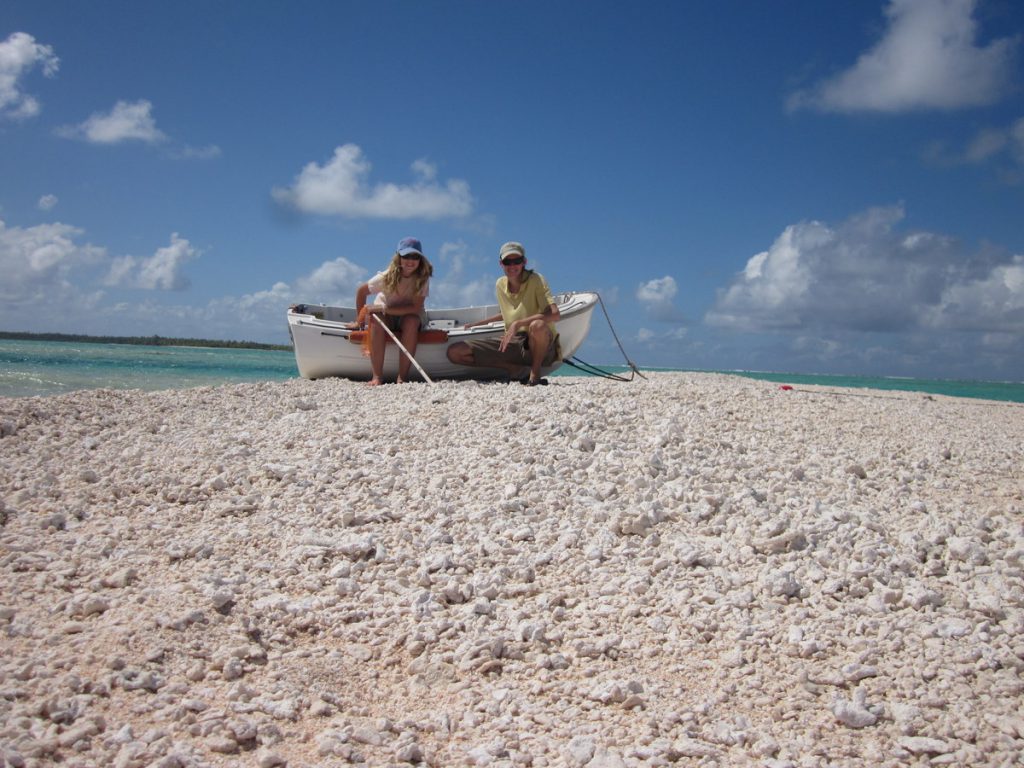
Of our two children, one was passionate about the sailing and enjoyed every minute of every passage and sailed our Portland Pudgy almost daily while at anchor. And one enjoyed the destinations a lot, but was fairly indifferent to the sailing and passage making.
One bought a boat shortly after starting a job as a yacht designer, right after graduating from college with a yacht design degree. The other doesn’t have a boat and is a librarian, but will go out for a sail if invited. I’ll let you guess which one is which…
Do you miss cruising?
My usual answer is, “Not more than two or three times a day.”
Seeing the world under sail can be a formative and life-changing experience. It’s far beyond just the cool things you see, though exposure to the world and different cultures can’t help but change you.
There is something about taking control of your destiny while preparing to face an enormous challenge that affects your outlook. You know you’re tackling something that most people can not, and even fewer would ever attempt. While it’s not nearly as hard as people expect, it is challenging. And you are putting yourself out there, where your preparation and skills are the first and last thing between you and the ocean.
But you’re walking away from the daily grind, and setting your focus and your priorities in different places than the land-bound. It’s a big break from societal and social norms and expectations. Making that break – both in your own head and from those who know you and expect things of you and do not understand what you are doing or why, that may be the biggest challenge we faced.
While I miss the exploring and the new places and the cool sights, I really miss the different focus and pace of life.

Leave a Reply