
Boater’s Guide to Engines III: Diesel Engines
May 12th, 2026 by team

by B.J Porter (Contributing Editor)
Boater’s Guide to Engines: The Internal Combustion Engine
Boater’s Guide to Engines II: The Four-Stroke Engine
If the first installments, we talked about how the internal combustion engine works and got into more detail about four-stroke engines. That gives us a good foundation for our next topic: the diesel engine.
You should understand some important reasons people use diesel engines on boats, particularly sailboats. And the differences between diesel and gasoline engines lead to changes in how you maintain them and use them.
First, we’ll highlight the major differences between gasoline and diesel engines. Then we’ll explain in more detail the reasons as we get into more depth about just how diesel engines can power your boat.
Key Diesel vs. Gasoline Differences
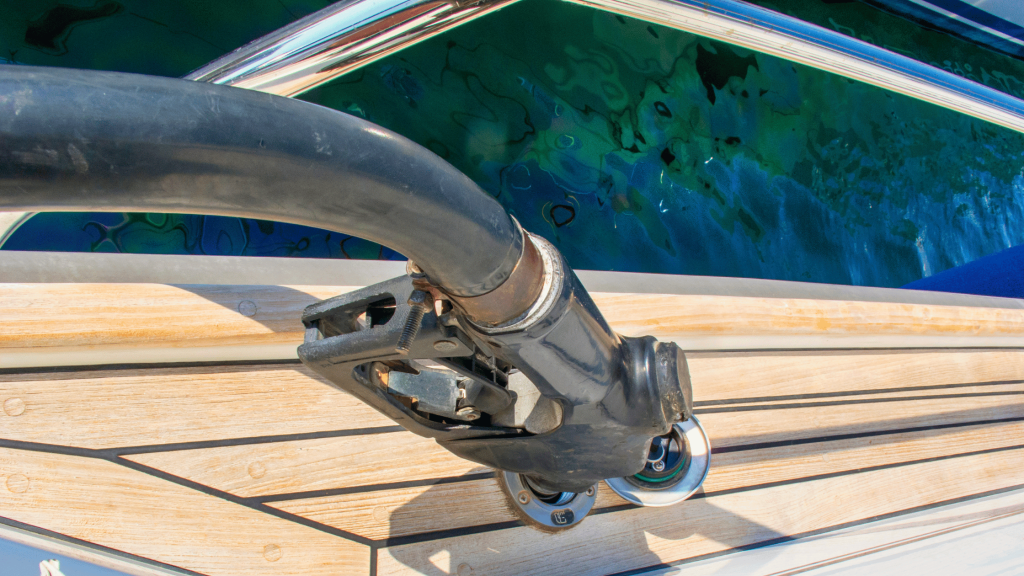
Almost all outboard motors are gasoline engines, and most inboard auxiliary engines on sailboats are diesels. On powerboats, inboard engines use diesel or gasoline. The choice for those depends on several factors, but the length displacement of the boat is usually the driver.
Some key differences between diesel and gasoline engines include:
- The fuel is an obvious answer, but the question is what about the fuel makes the engines different? Gasoline is more volatile than diesel and requires extra safety precautions; diesel has more energy by volume and is less volatile.
- Gasoline engines use spark plugs to ignite the fuel for the power stroke; diesels do not.
- Diesel engines will always be heavier than gasoline engines of similar rated power.
- Gasoline engines may use carburetors or fuel injectors; diesels are always fuel-injected.
- Diesel engines are more expensive for the same amount of power
- Diesel engines have more torque at lower RPMs than gasoline engines. Gasoline engines maximize power at higher engine speeds.
- Diesel engines can be more efficient than gasoline engines.
- Because diesel engines are built more heavily, they usually have a longer life than gasoline engines.
How (and why) diesel engines work

The fundamental difference with diesel engines is how the fuel ignites for the power stroke. If you recall from earlier articles, inside any engine, the piston compresses the air and fuel mixture during the compression stroke. Then the fuel ignites, pushing the piston down with the resulting combustion.
Gasoline engines use spark plugs with a precisely timed electrical spark to ignite the fuel.
In a diesel engine, the fuel ignites from the heat of the compressed air in the cylinder. So they do not use spark plugs or electricity, and the timing of the fuel injection in the cylinder is crucial to getting the proper ignition timing. The ignition happens on its own from the compression heat, not from a timed spark, so mixing the fuel and air at the right time while compressing is critical.
The four strokes in the engine cycle are the same, but the power stroke starts with different ignition means. Otherwise, it’s basically the same.
Fuel flash point
The flash point of a fuel is the lowest temperature at which enough of other liquid vaporizes to create a combustible fuel/air mixture. Without getting into a detailed lecture on chemistry and Boyle’s law, as temperature increases, so does the vapor given off by a fluid. When a combustible fluid warms up, it will eventually produce enough vapor to burn if an ignition source is present.
The flash point of gasoline is -45°F (or -42.8 °C). So at normal temperatures, even in winter, if you toss a match into a cup full of gasoline, it’s going to ignite spectacularly.
But the flash point of #2 diesel fuel, the most common fuel, starts at 125°F (52.2°C). So at room and normal operating temperatures, it’s not actually readily combustible. So forget all those movies where you see drums of diesel exploding because someone tosses a match at them or hits them with a bullet; it doesn’t work that way! Diesel really doesn’t want to burn at room temperature.
You cannot simply create a spark to ignite diesel in a piston; nothing will happen. You need to atomize the fuel into a fine mist and heat it hot enough to burn.
Inboard gasoline engines use a spark arrestor installed to prevent accidental fires, and it’s crucial to run vented blowers before starting an engine and after refueling. But diesel engines don’t have either requirement because the fuel is much less volatile.
High compression cylinders
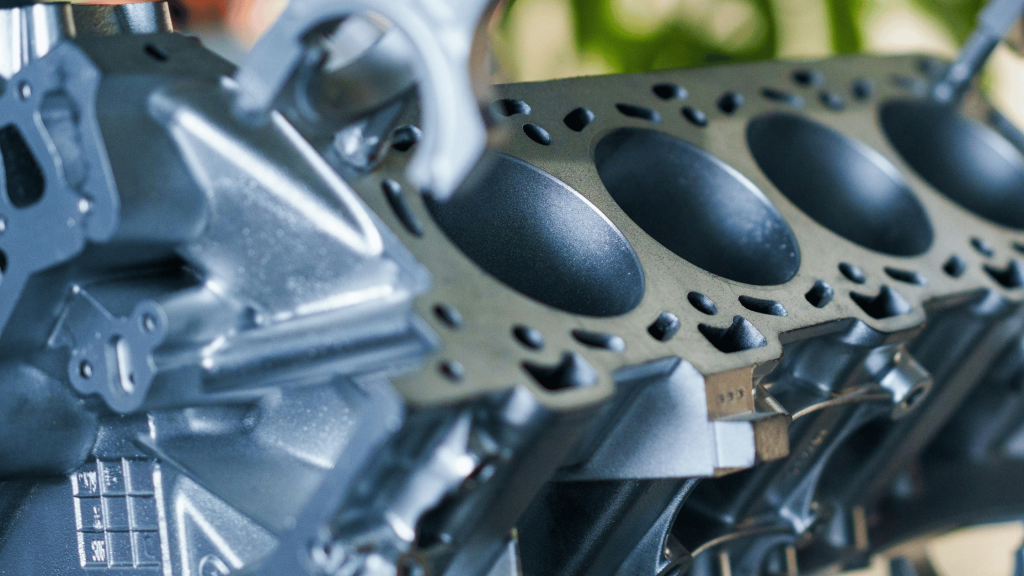
Compressing a gas heats it up. The hard sides of an engine cylinder are airtight, and during the compression stroke, the piston moves up and compresses the air and fuel in the cylinder. As the pressure increases, the air in the piston gets very hot. Hot enough to burn the atomized diesel.
Gasoline engines also compress the air and fuel in the cylinders, but they don’t need to compress it as much because they don’t need the heat from the compression. So the compression ratio of gasoline engines typically ranges from 8:1 up to 12:1, though some run higher.
Diesel engine compression ratios are typically from 14:1 up to 23:1. So there is a lot more pressure in the cylinder to heat the air. As a result, you need much heavier and stronger cylinder walls and a heavier overall construction of the engine block. This is the primary reason diesel engines are heavier and a significant contributor to cost.
Fuel injection
With a low flash point, gasoline is flammable when simply mixed with air. So gasoline engines can use carburetors to mix fuel and air that’s drawn into the piston during the intake stroke.
This does not work for diesels, and the fuel must be atomized and forced into the cylinder to enhance ignition. A fuel injector forces a high-pressure fuel feed through a precisely shaped nozzle that creates a fine mist of diesel. This increases the surface area of the diesel as it mixes with the heated air.
Injecting too early or too late in the combustion cycle can reduce efficiency and increase byproducts and emissions. Many older diesels use mechanical injection, where a strictly mechanical process controls the injection timing to automatically inject the fuel. While ignition timing in gasoline engines centers on when the spark plugs spark, varying ignition timing in diesels changes the fuel injection timing mechanism.
Newer engines typically use Electronic Fuel Injection (EFI) or Common Rail injection (CR). These allow electronically controlled injection, with optimized computers adjusting injection timing and characteristics based on the load, speed, and operating demand on the engine. This allows for a remarkable increase in efficiency and power yield.
There are also tremendous benefits for fuel injection with gasoline engines, but fuel injection is not required for them.
Improved diesel performance
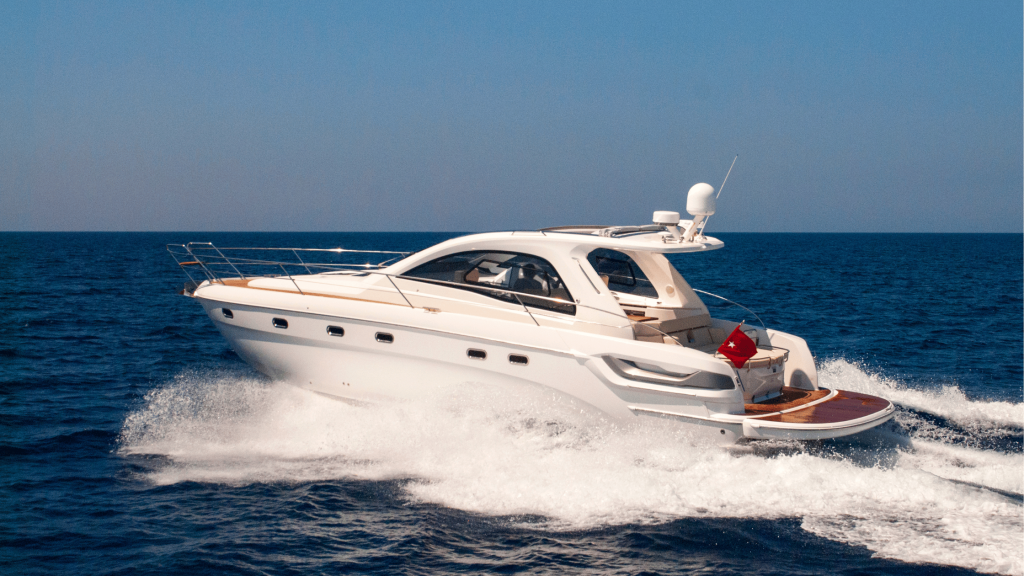
Looking to improve performance and efficiency in diesels, engineers figured out a few ways to power them up. Today’s diesels share the same core ignition concepts as the earliest naturally aspirated engines, but there have been a few updates that are so effective that they come on almost all new engines. Diesel engines in 2026 are lighter, smaller, and much more powerful that those from even twenty years ago.
Air charging
One of the best ways to get a powerful energy burn in a diesel cylinder is to get more air in with the fuel. Naturally aspirated engines pull air into the engine with the suction from the piston during the intake stroke. But we can do better, because the more air you can mix with the fuel, the more completely it will burn.
Both turbocharging and supercharging inject air into a cylinder with increased pressure and volume, resulting in greater power for each ignition. Both types of charging perform the same function – forcing air into the engine. But a turbocharger uses a fan driven by the engine’s exhaust to pump in the air, and a supercharger uses a pump driven mechanically or electrically from the engine’s output.
Fuel injection and mixing
As we mentioned earlier, EFI and common rail fuel injection have dramatically increased how well injection timing can vary with engine demand. This allows for a more complete burn and higher fuel efficiency with more power delivery.
Piston surfaces are also finely engineered and shaped to maximize fuel and air mixing to enhance ignition and combustion. Coupled with optimal injection timing, this really increases the output power.
Computer control
Modern diesels have an onboard computer controlling everything. It monitors all the operating conditions, such as exhaust temperature, rotational speed, and many other data points. Based on those, the computer makes precise determinations on ignition timing and how the engine runs through a range of conditions.
The good news is that the computers are very good at this and they dramatically enhance engine output. The downside is you can’t diagnose some problems in your engine as easily without a code reader to plug into the onboard computer!
Why use one or the other?
So why do some boats use gasoline while others have diesel? Like anything, there are many factors to it. Weight, cost, and safety are some of the big drivers.
There were several incidents with sailboats that led to gasoline disappearing as a choice for auxiliary engines. Like LPG gas, gasoline vapors are heavier than air. They can sink into a sailboat’s deep bilge and create a fire or explosion hazard. It didn’t take too many incidents to convince the industry that diesels were better options for safety and that they wouldn’t really impede the boats with their weight.
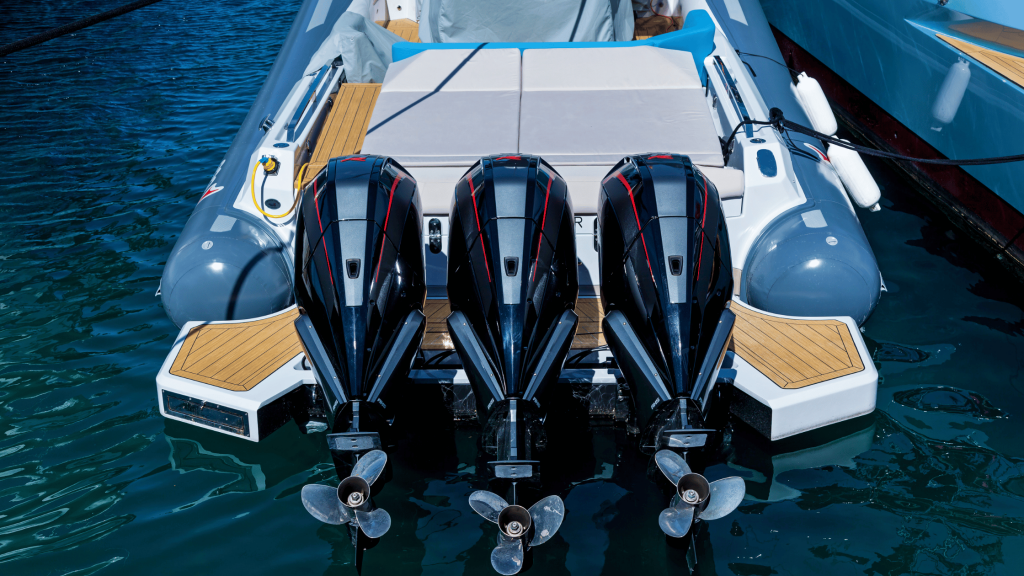
For powerboats, it’s more a matter of efficiency for the size of the boat. There have been diesel outboards made, but they’ve not really caught on. For the reasons we’ve discussed above, they are definitely heavier and more expensive than gasoline outboards. Outboard engines remove much of the fire risk from vapors in the bilge, and for boats up to a certain size, they are a very efficient way to get up to speed and run a boat.
Inboard engines are a different question. Diesels do have a longer life and are more efficient. But diesel fuel used to be much cheaper than gasoline, not it is not. So that driver has disappeared, though the efficiency remains. But the diesels are still heavier and more expensive to install.
From a performance perspective, though, there is a crossover point where diesel engines are more effective with that low torque power delivery, and gasoline engines top out in RPMs and just don’t get it done. While it depends a lot on displacement, somewhere around forty to forty-five feet is the crossover point where you see almost only diesels instead of gasoline inboards.

Leave a Reply