
Tilt and Trim: Smooth running on your boat
March 10th, 2026 by team
by B.J. Porter (Contributing Editor)
On any day on the water, you’ll see a lot of boats trimmed pretty badly. Uncomfortable passengers bounce and shake as the boats porpoise across the bay or slam into waves, or big wakes spray up behind boats burning way too much fuel to go that slowly.
What is behind getting the tilt and trim on your boat just right? What about trim tabs? Do you have them? Do you need them?
When your boat is up on a plane and going fast, you want it as level as possible. But wave conditions and the load and placement of passengers and gear can affect how you must trim the boat for the most efficient, comfortable ride.
While trimming your boat isn’t hard, you need to understand the basics of how it works to master your own boat.
What is trim?
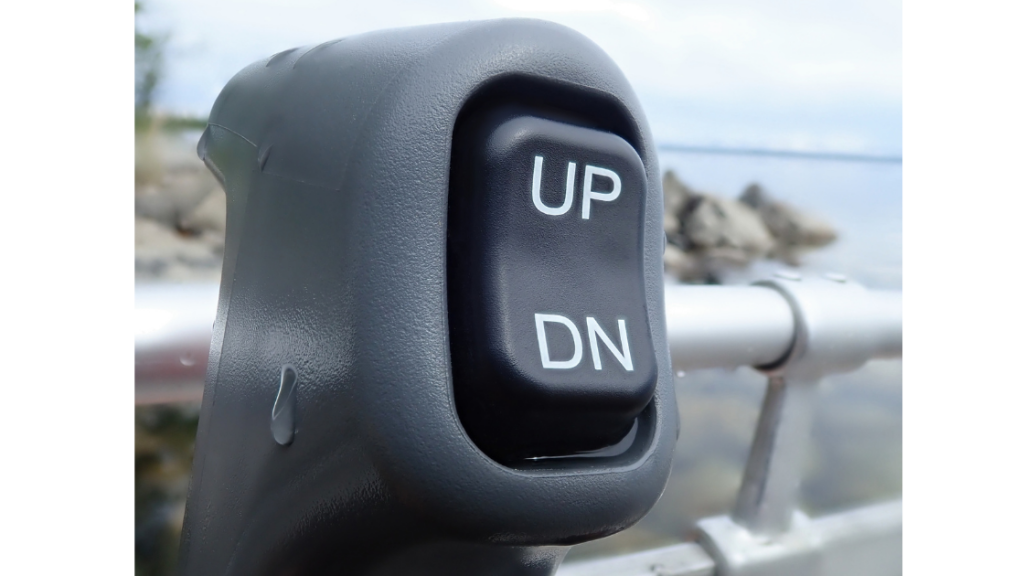
“Trim” can refer to the angle of the hull as the boat moves across the water. But it is also the name of one function of your outboard or outdrive, and the trim function will affect the tilt of the boat. The trim/tilt button is usually on the controls of the engine at the helm, though many engines will also have buttons on the engine.
It’s not a specific subsystem; it’s one mode of the hydraulic or electrical system which moves your engine up and down in the water. Trim is the fine adjustment you make to the propeller angle to correct how the boat runs through the water.
Trimming in/negative trim
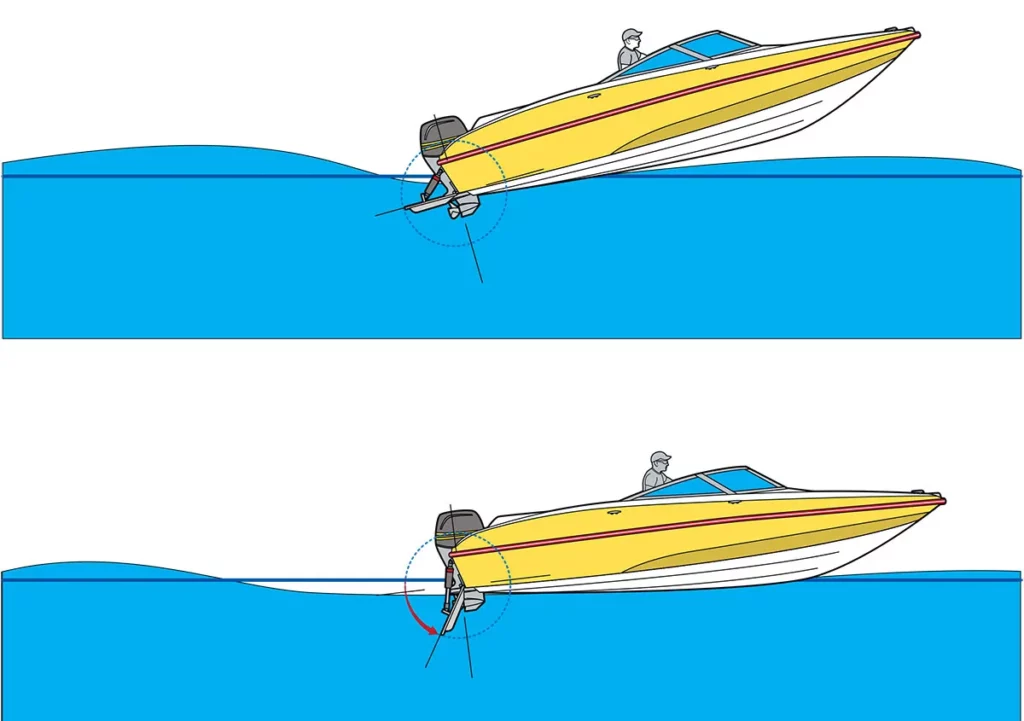
Trimming in tucks the engine all the way down and pulls it against the transom of the boat. The propeller’s thrust actually aims a little downward, and it gives lift to the stern of the boat. This helps you plane more quickly, and you should trim the engine all the way in before accelerating to plane.
Trimming out
If you trim out too far, you’ll add so much bow lift that you might not see over the bow of the boat. And worse, you may get the blades of the propeller too high in the water, which causes cavitation and a big, slow, frothy wake. When tilted too far out, the boat will also tend to “porpoise” as the bow bobs up and down as the over-tilted engine thrusts unevenly in the water.
And how about Tilt?
Tilt is an automatic mode of your lifting system that kicks in when you’ve reached the end of the more fine trim function range. The engine tilts more rapidly to lift clear of the water.
The tilt function is to lift the prop out of the water, when bringing the boat in to pull it from the water or close in the shallows. You will not want to run the engine when tilting it out of the water, as you’ll quickly damage the impeller in your water pump as the engine runs dry. Watch the stream of cooling water coming out of the engine. If it stops, quickly lower the engine back in the water.
What are trim tabs?
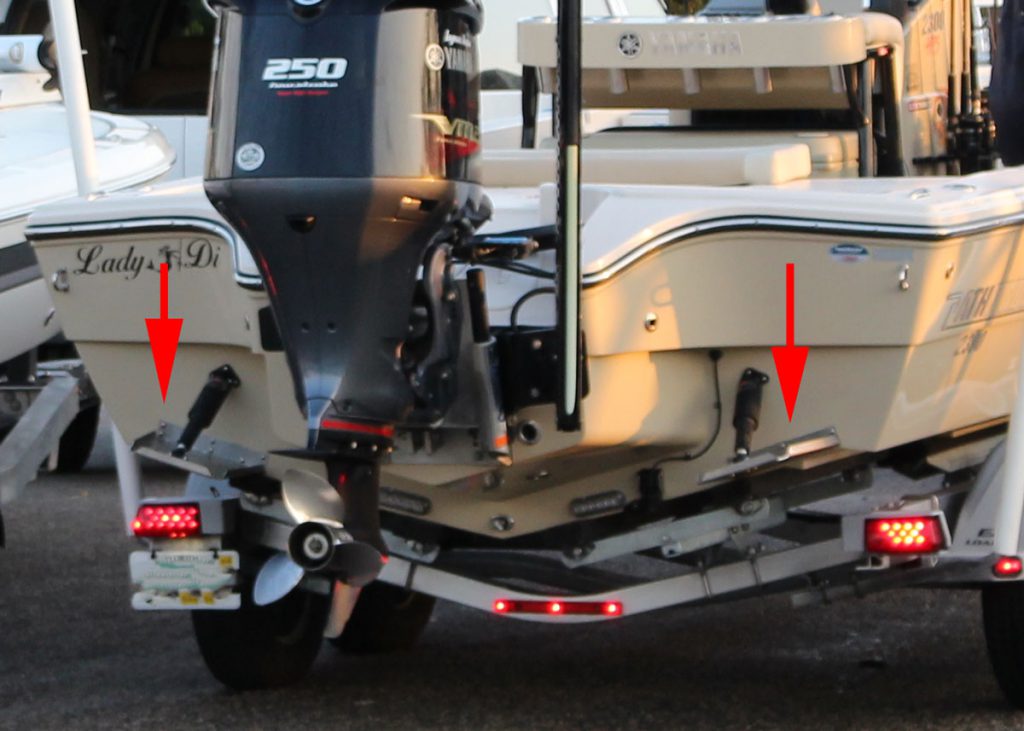
Trim tabs are plates installed on the stern of a boat. Not all boats have them or need them, but they are another tool to manage the level of a boat and offset any heeling to either side on an unevenly loaded boat.
They work independently of the tilt and trim on an engine and can make fine adjustments to keep the boat level in all directions. Most trim tabs are labeled Bow Up/Down, and can adjust the boat’s trim without affecting the lift angle of the engine.
How do I use trim, tilt, and tabs?
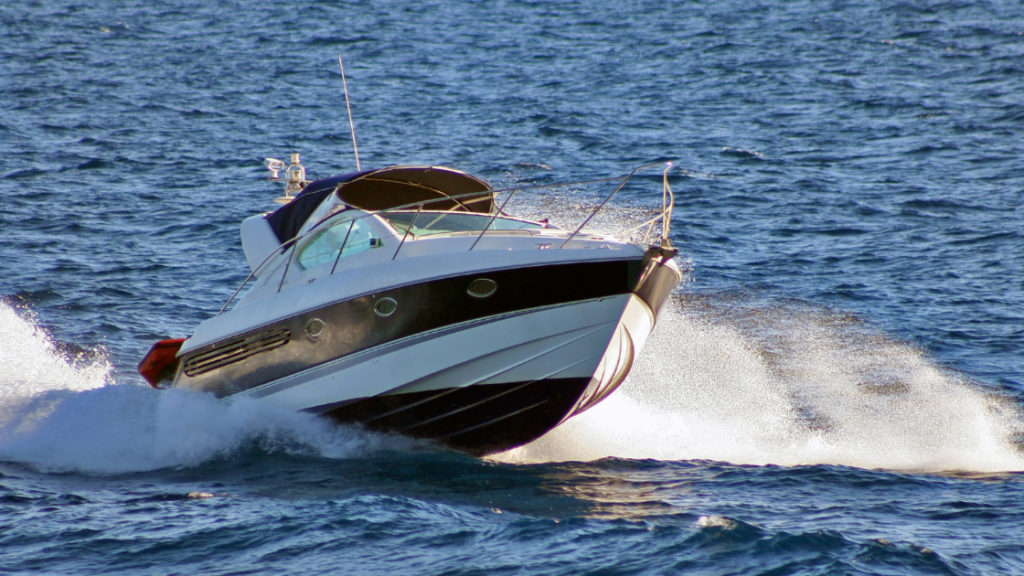
The optimal position for most boats on a plane is closest to level with the bow just a little up, with no lean to port or starboard. Of course, this will vary from boat to boat, as there are many hull shapes and engine combinations which lead to slightly different optimal trim positions.
The goal is to get the boat running smoothly over the water with maximum engine and fuel efficiency. The right trim position will let the props spin up to a comfortable level, with minimum effort and fuel consumption by the engines. Of course, wind, waves, and weather will also affect how you trim, trading comfort for efficiency in some situations.
To get your boat up on plane and trimmed, follow these general steps.
1) Motor away from the dock or ramp until you know there’s enough water under the boat to squat the stern when you open the throttle. You may have to trim the engine up to get out of the shallows.
2) Trim the engine all the way in when you’re ready to hit the throttle.
3) Open up the throttle, increasing speed steadily as the boat climbs out of the “hole” and onto a plane. Your bow will rise and may obscure your vision forward, then will drop as you plane.
4) Once you’ve started planing, gradually trim the engine up. You will see the bow lift and the engine RPMs increase as it rises.
5) Trim until you’ve got a smooth-running boat with the engine running at higher RPMs.
If you trim too far up, the boat will start to “porpoise,” as the bow rises and down as the over-extended engine lifts it up, and it falls back. Trim the engine back down until it levels out and the porpoising motion stops. This will be pretty close to the optimal level of trim for this speed and condition.
You may need to adjust the trim if you change your running speed or RPMs. So watch your trim and adjust it as needed.
Trim Tabs
If your boat has trim tabs, you can use them to raise and lower the bow for comfort and visibility, and you can also fix any lean the boat has. They give you a bit more flexibility if you find the optimal engine trim leaves you unable to see forward, for example. You can lower the bow with the trim tabs to solve the problem.
Trim with the engine first, and fine-tune with the tabs.
What if I can’t get up on a plane quickly?
Weight loading in a boat will affect your ability to get up on a plane, and if you’re struggling to get out of that hole and on a decent plane at full throttle, slow the boat down to idle and rearrange the passengers. Move some forward, which will bring the bow down and help with planing.
Trimming for weather and waves
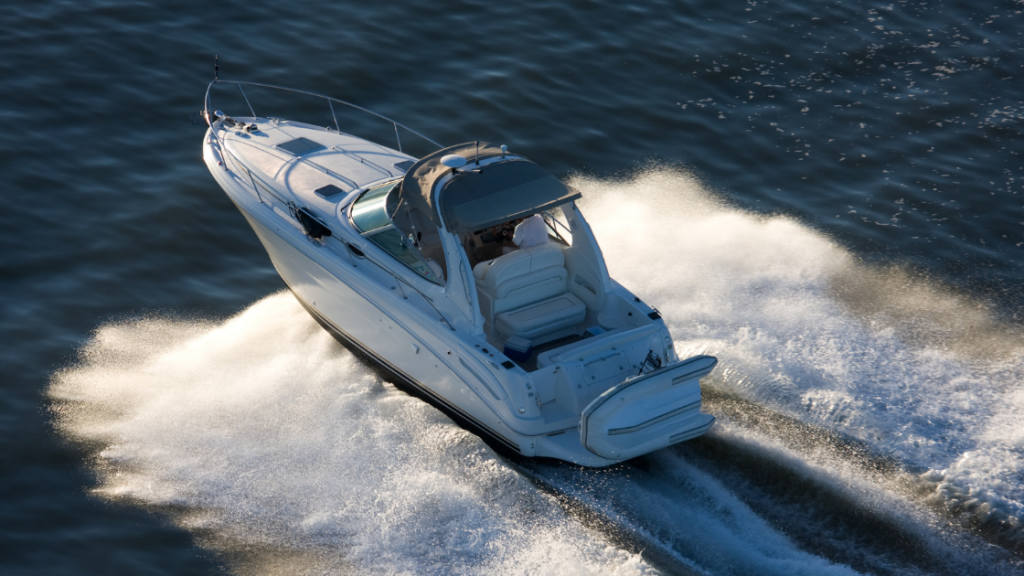
Powerboats can quickly get uncomfortable or wet in heavy wind and chop, so learning to adjust your trim for comfort instead of speed and efficiency is a helpful skill.
For most boats, trimming the engine in lowers the bow and helps the boat cut through waves. This should stop much of the violent slamming you can experience trying to run at speed. Slowing down helps, and in some situations raising the bow at lower speeds may help deflect waves away from the boat. This will vary with the direction the waves are going – with you or against you – and how tall they are.
The best approach is to know what your boat will do with different trims, and keep making slight adjustments until you’ve reached a comfortable traveling speed for you and your passengers. Control of the boat is essential, and you don’t want to beat up your passengers!
What is the optimal trim for my boat?
There’s no right answer to this question, since even identical boats will trim differently with different payloads and passengers on board.
So it’s important for you to spend as much time as you can learning how your boat trims. The more you know about how adjustments to your engine tilt, trim tabs, and passenger placement can affect your trim, the more quickly you’ll be able to adapt to keep your boat trimmed up and running smoothly.
When you’re running your boat, play around a little with the trim. Make mental notes or even log entries about what worked well and what didn’t. Like all the skills we talk about here, the actual key to mastery is helm time, practice, and paying attention to the results.

Leave a Reply