
Understanding the New PFD Labels: What Every Boater Needs to Know
June 3rd, 2026 by team
by B.J. Porter (Contributing Editor)
The other day we were browsing in a marine store for a new PFD and got a look at the new labeling on life jackets. Like many of you, I’d heard about the new rating and standards and the elimination of the old “Type” classifications. But PFDs aren’t something you buy every day, and it really didn’t affect me until we stood in the shop trying to figure out what the new systems meant.
It’s actually not that complex and is simpler to understand then the old system. But the old numbering system is also still in effect, sort of. The USCG isn’t issuing those ratings to new PFDs, but approved products will still be sold with the old ratings. So you can still find a brand new “Type III” labeled PFD hanging in stores, and will for the foreseeable future. So what we need is a roadmap to get the best safety gear.
Ye Olde Standardes
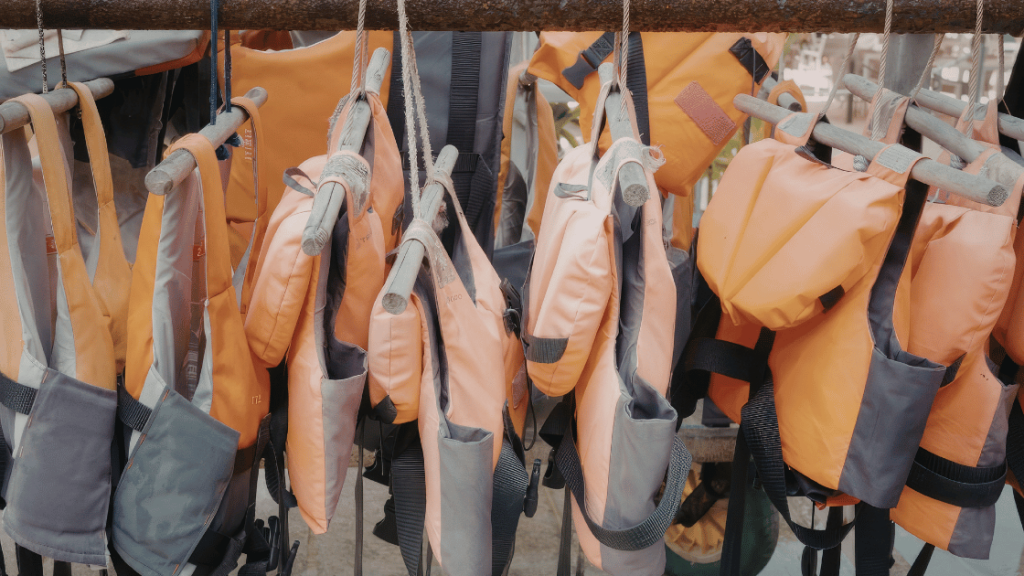
For decades, boaters in the U.S. equipped their vessels with PFDs in the I, II, III, IV, and V categories. In a spirit keeping with Fahrenheit temperatures and measurements in feet and inches, the USCG standards for safety were not the same as most other countries in the world, even with our neighbors directly to the north in Canada.
So equipment manufacturers working in global markets had to certify and label their gear with different rules and guidelines. PFDs certified for the U.S. were not certified abroad.
The Roman numerals in the USCG system corresponded to different types of PFDs and uses, and the standards for what you needed referred to the category.
The old system
| Category | Type of PFD |
|---|---|
| Type I | Offshore lifejackets with the best protection for cruising, racing, and fishing in rougher waters or alone. Will turn most unconscious people face-up in the water. The bulkiest and least comfortable, but the most buoyant. |
| Type II | – Type II Inherently Buoyant PFDs are not intended for rougher conditions and is for mostly inland day use in light craft. Will turn some unconscious people face-up in the water. They are easier to wear and more comfortable than a Type I – Type II Inflatable PFDs are not guaranteed to turn a unconscious person face-up, but are more comfortable and have more flotation than Inherently Buoyant PFDs. They can be automatic or manual, and are not intended for children under 16. |
| Type III | Type III Inherently Buoyant PFDs not intended for extended survival and will not turn a wear over. Intended for supervised sport use in protected waters. Ski vests, dinghy jackets, and so on. Type III Inflatable PFD are similar in protection to Inherently Buoyant models, but are more comfortable and only inflate manually. Not intended for children under 16. |
| Type IV | Throwable devices and supplemental flotation not intended to be worn. Ring buoys, seat cushions, and horseshoes buoys. Not intended for unconscious people or non-swimmers. These are only meet the USCG requirements when they are immediately available. |
| Type V | This is more of a catch-all category of special use PFDs, including automatic inflating and hybrid inflation jackets. They usually do not flip unconscious boaters face-up, but they are comfortable to wear for longer and people must wear them to count as required flotation. |
Although this standard was a little confusing to some, most boaters could puzzle it out enough to get their safety requirements met on their boats.
But this system was not compatible with most of the rest of the world, and it also wasn’t well tailored to the individual boater and their intended uses and activities.
The New Standard
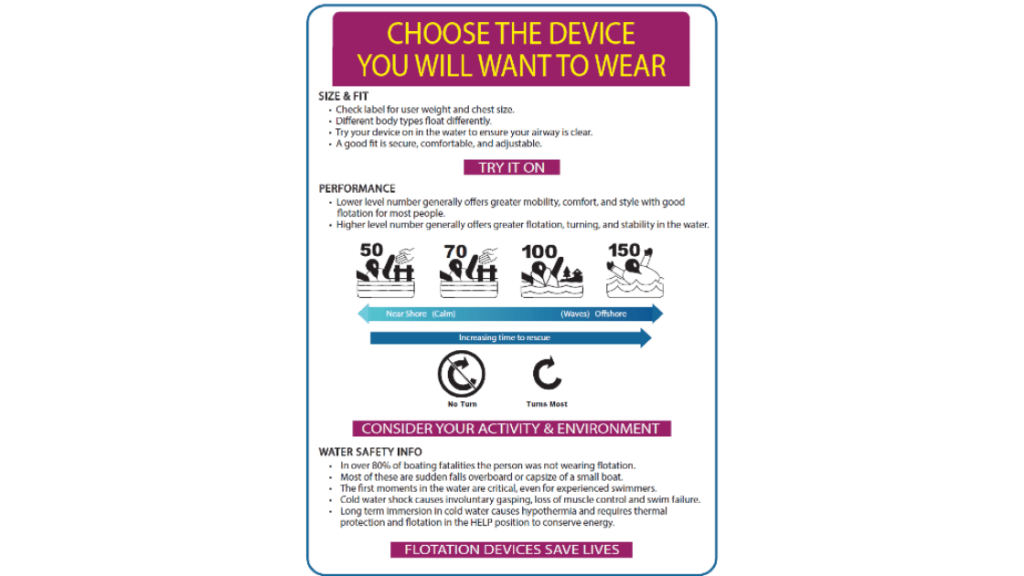
Once you get your head around it, the new standard makes sense. It focuses on the performance of the PFD, with specific approvals for some activities but not others. And it clearly shows whether you can expect to end up face up if you go into the water unconscious.
But…like those new laundry and care symbols in all your clothing now, there are a lot of standardized symbols to tell you what the jacket is good for. If you don’t know what the image means, it’s easy to grab the wrong type of equipment.
Three major things categorize the new PFDs:
- Performance Level – This is a number and will be 50, 70, 100, or 150. While it correlates somewhat with buoyancy added (measured in Newtons), it does not correspond directly to Newtons of flotation provided. A Level 70 PFD is not providing exactly 70 Newtons of flotation, because it may be much bigger or smaller depending on its size.
- Turning ability – Whether the PFD can be expected to turn you over if you are not conscious. Generally, you’ll need at least Level 100 to expect some chance of getting flipped.
- “Not Approved For” – this lists any activities the PFD is not approved for use with. These are usually high-speed activities, like water skiing, towed sports, and personal watercraft.
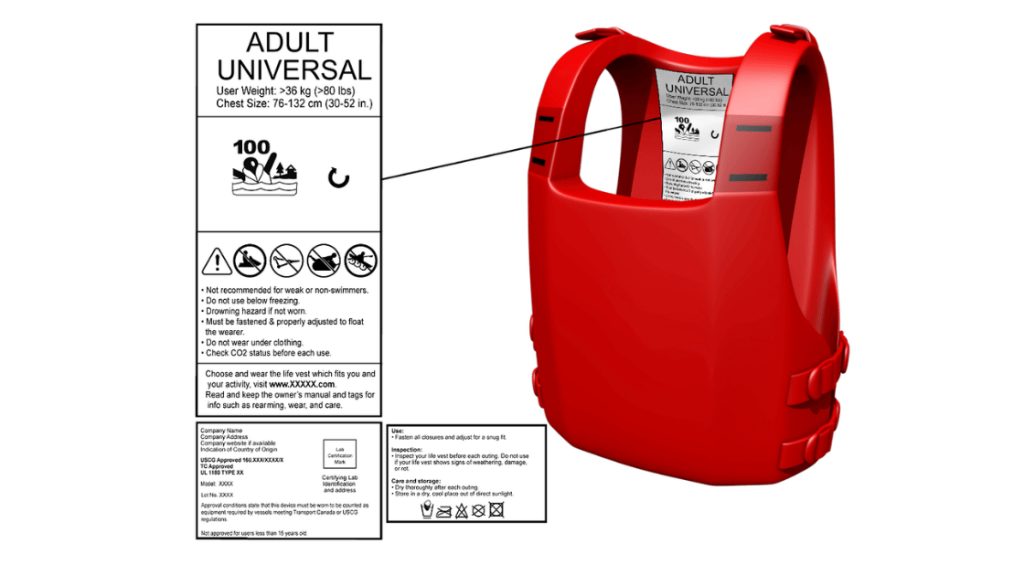
There is also very detailed sizing information, and the body measurements shown on the size panel should be used to select a PFD. This will include body weight ranges and chest sizes, if relevant.
Understanding Performance Levels
Level 50 is more of a buoyancy aid, and not really recommended for non-swimmers or weak swimmers.
Level 70 is a buoyancy aid, closest to the old Type III sailing and paddling vests.
Level 100 is the first proper life jacket, and closest to the Type II higher flotation PFDs. These will probably turn you face-up.
Level 150 are the high-flotation offshore life jackets, and are designed to self-turn unconscious wearers.
How to read the new label
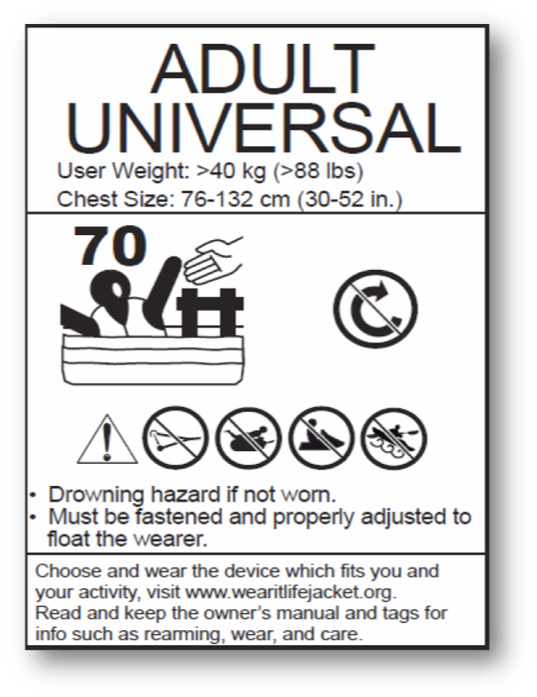
Using the example label above, you can tell several things about the PFD.
- It’s level 70 protection, so it’s more of an inland piece of gear.
- It’s sized for an adult, but not necessarily a very large one. Most PFDs will also have a size on them, like M, L, XL, and so on.
- It will not turn you over if you are unconscious.
- It’s not appropriate for water skiing, tubing/towed sports, personal watercraft, or whitewater kayaking.
Obviously, you’ll be holding the PFD in your hand, looking at it when you see the label. You will see how heavy the flotation is, how it straps on, and where the flotation is distributed. It will be clear whether you’re holding a vest, jacket, or horse collar style device, but the placard tells you exactly how it will perform and how you shouldn’t use it.
USCG Boating Requirements
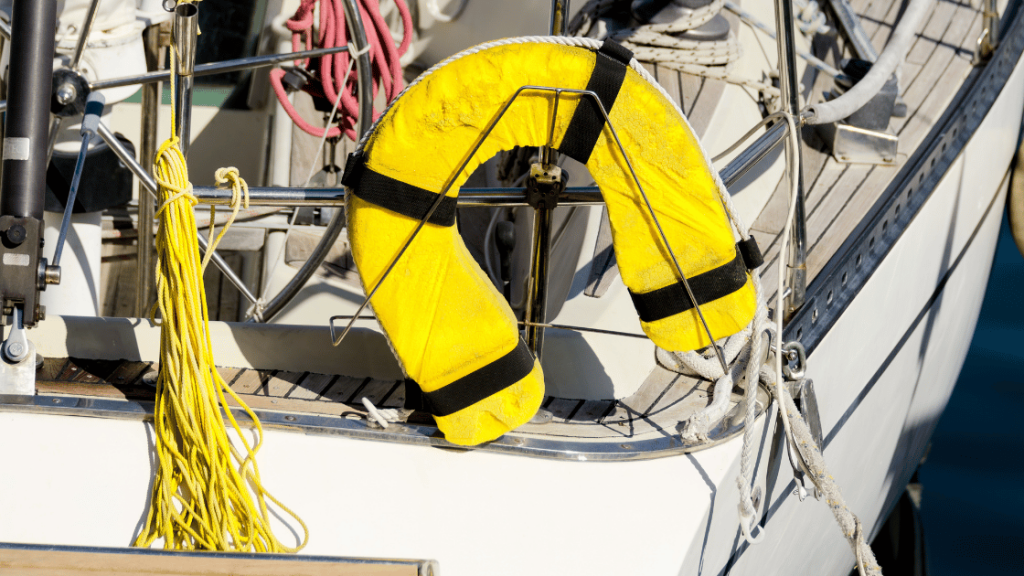
Interestingly, the USCG minimum required boating equipment specifies wearable PFDs for every person on board, and one throwable for boats over 16 feet. But it does not get into great detail about the type of PFD.
And that makes some sense, because requiring everyone to have a Type I er… Level 150 jacket makes little sense if you’re running an 18′ open fishing boat or day sailor that never leaves a shallow, protected bay.
So the type of wearable PFD depends on the type of boating you do, so don’t look for the USCG to tell you the details about the type you need.
Shopping for a new PFD
The key criteria for safety in the new standards are both the performance and the fit. If you’re buying a five-pack of Level 100 orange horse collar floats to meet number requirements, you will not try them on. But for most other applications – meaning the PFD you should regularly wear while boating – you want something comfortable.
Coming into the store to pick out your PFD, you will need to know what you’re buying it for and how you intend to use it, but you also want to try it on.
And don’t just throw it on loosely to see if you can get into it. Shop by weight and chest size first, then take off any outerwear and put the PFD on. Clip all the buckles, then tighten them up to make sure you have a snug, comfortable fit. Move around a little, bend over, wave your arms around. Make sure it’s not pinching or restricting you.
Make sure you buy something with a good fit and the right performance level for the type of boating you plan to do.

June 07, 2026 at 2:30 pm, Alan D. Scott said:
A very useful article…Thanks!
Regarding MOB, there is a huge difference between being on the boat and in the water.
On our sailboat, we wear a certified harness, clipped to designated fittings with adjustable tethers. Our PFDs are kept close at hand in case of a sinking or need to “bail out”.