
Winter on the Water: A Practical Guide to Staying Warm
February 13th, 2026 by team
by B.J. Porter (Contributing Editor)
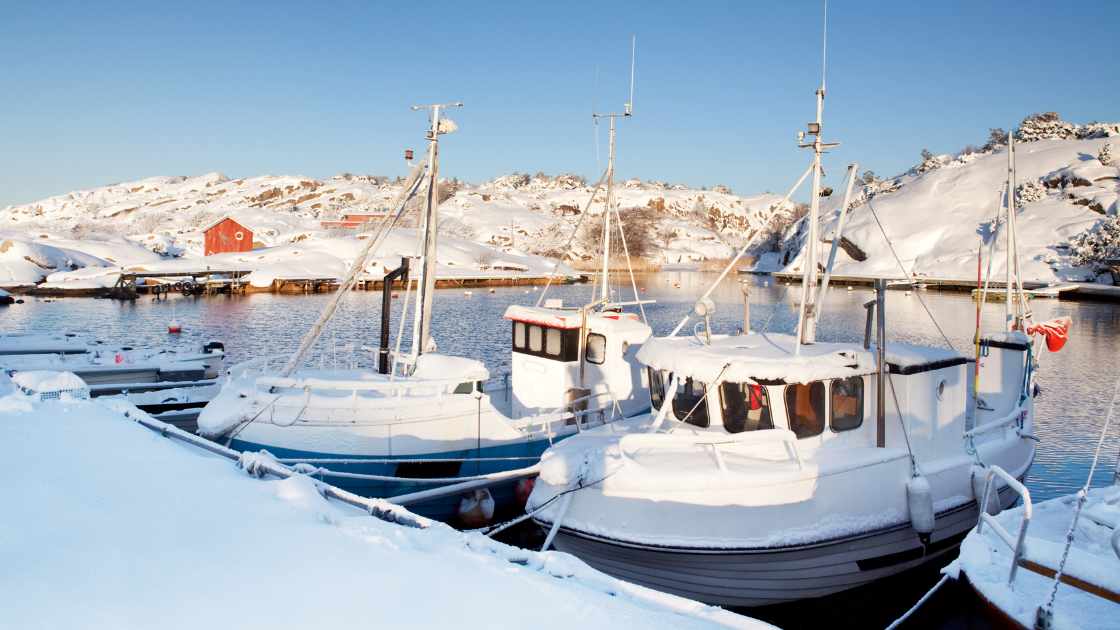
Back when I lived in New England, by February we were getting a little stir-crazy and ready for boating season. And when we got the boat in as early as possible, well, it wasn’t always the balmiest of weather in New England. But that didn’t stop us from getting out there. And for the fall, we always extended the season as late as we could. While it wasn’t warm on Block Island at the end of October after they’d pulled up most of the floating and dinghy docks, we still had some enjoyable trips.
Just a little thought about staying warm can help you extend your boating season, if you’re game for it.
“There is no such thing as bad weather, only inappropriate clothing.” Unknown (various sources)
Dress Warmly
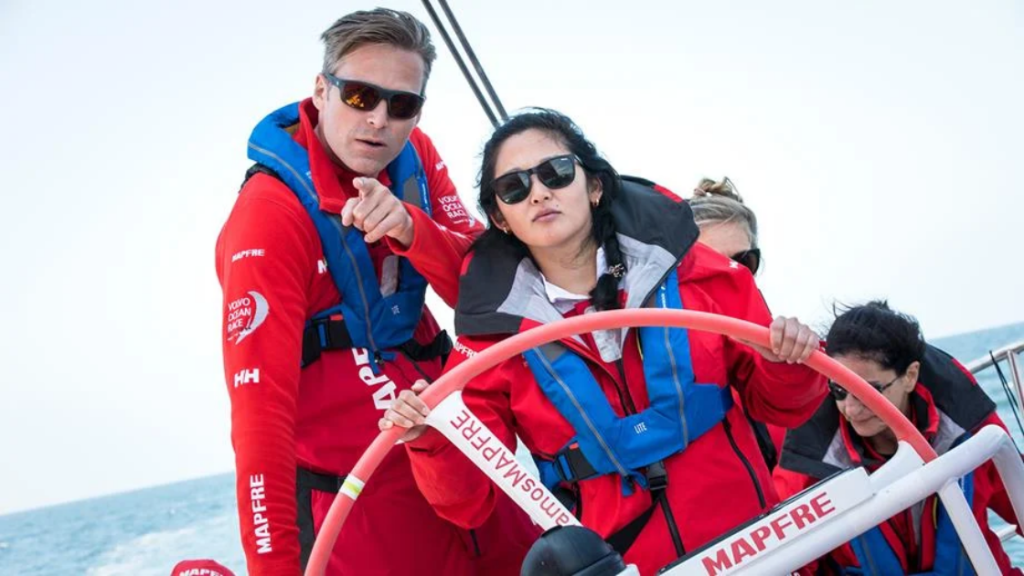
Bringing appropriate clothing is the obvious first go-to. While you don’t need all-weather foulies if the weather is decent, it’s easy to forget that being on the water is just…colder. You have more breeze and less protection from it, so a cool day can feel cold when you’re sailing upwind into eighteen knots of apparent wind.
Think layers, like you would for any other outdoor activity.
- A base layer near your skin.
- Insulating layers above that as needed.
- An outer windproof shell.
- Protection for extremities like hats that cover your ears or gloves.
You won’t want all this stuff for lounging around in the cabin, of course. We’ll get to staying warm inside next. But you will have to spend time in the cockpit and on the deck to get to and from your destination. And a cool spring or fall day can become a misery if you don’t have good gear. Of course, you’ll want to get off the boat and walk around on shore. Although shore excursions are generally warmer than being on the water, you still want to be comfortable.
A few notes on clothing choices:
- Avoid cotton if you can, at any layer. It doesn’t keep you warm if it gets wet. Wool blends and synthetics are a better choice.
- Do not overlook wind-breaking top layers. Sweaters and sweatshirts are warm, but sailing upwind or running at speed on your powerboat will cut right through them.
- Breathability in your gear is good. You can overdo it with the layers!
Boat Heating Systems
Keeping your boat warm on the inside is a key part of spending a comfortable night on board when the temperature dips. Many boats have heating systems on them, and you’d be surprised to learn a lot of boaters might have one and don’t realize it!
If you never spend the night on your boat in cool weather, you may never have had a reason to use it.
Reverse Cycle A/C
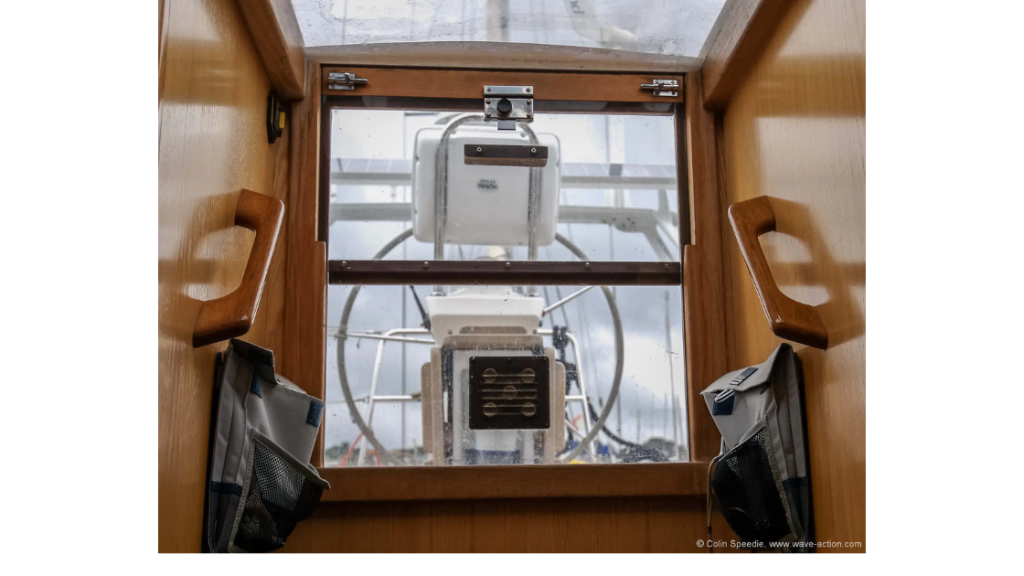
If your boat has air conditioning, there’s a very good chance you’ve also got heat. Most air conditioning systems have a reverse-cycle switch in them, which runs the system in reverse to extract heat from the water instead of using the water to cool your boat.
If you have a system with mechanical controls and there’s a “heat” switch or knob, it may be as simple as switching it on. On newer systems with LCD panel controls, it may not be as obvious. So check out all the menus to see if you have a heat setting, or look in your owner’s manual.
There are a few things to know about reverse cycle heat, though.
First, it is a “heat pump” style system, similar to air-based heat pumps in homes, except it uses the latent heat in the water to warm your boat. What this means on a boat is that once the water gets too cold, it will no longer produce heat. So it will not work in the dead of winter, but should be fine in the spring or fall.
The second thing is it is an electrical system, so it will use power just like air conditioning. Quite a bit of power – you will probably need shore power, or to have your generator running, just like you would for air conditioning.
That doesn’t mean it isn’t an excellent stop-gap to extend your boating season. We’d often take late-season slips at a discount instead of anchoring out so we could run the heat. More than a few late October weekends we spent on the dock in Newport, RI, in a half-priced slip, taking in the town in the crisp fall weather and doing some Christmas shopping without the crowds. You just have to plan a little.
Diesel Heat
Some hardy souls who live in more extreme latitudes and plan for cool-weather boating just to have a decently long season put diesel heat on their boats. This can be a complete game-changer for cool weather, since it will keep your boat cozy and warm without requiring the massive amounts of electrical power of a reverse-cycle system.
Diesel heat is a pretty major upgrade if your boat doesn’t have it, but it is more efficient than running a generator with A/C, and will work in any water or air temperature outside.
Bring Aboard Heating
Boats have small interior spaces compared to houses, so you can heat common areas up pretty quickly to get comfortable. There are a few heating systems you can bring on board to help.
One disadvantage to any of these portable heaters is that they will not disperse heat evenly around the boat without additional ventilation. So you may warm up one area like the saloon with a heater, but it won’t do much for cabins on its own unless you leave the doors open and maybe place some fans to move the heat around.
Electric Space Heaters
Unless you connect to shore power, these are often not excellent options for boats. They can use a lot of power and will drain your batteries quickly through an inverter if you even have the circuitry or power to run them.
Most electric coil and ceramic heaters run up to 1,500 watts. This is about 13 amps of A/C power. Many of your shore power circuits will only be 15 Amp or 20 Amp circuits. So if you try to plug in one, it may blow the circuit on startup. And a second heater on the same circuit is a nonstarter.
There are also fire risks with them if cloth or flammable material is draped over the front. So take great care to operate them on low power (750W) settings and keep them well clear of obstructions.
A better option for space heating on a boat may be an oil-filled heater. These are bulky and not compact, but often have lower wattage demands and a much lower risk of fire from exposed heating coils.
Portable Propane
There are several good portable propane heaters available rated for indoor use, and these can keep you snug and warm. Most of these will run on the small one-pound propane containers you’ll find with camping supplies, but some have adapters available to hook to a 20-pound tank.
As always with propane, you have to be very careful on a boat with it. There are two risks: fires/explosion and carbon monoxide. For the best operation, here are a few best practices.
Verify that your heater is rated safe for indoor use. Do not use one that is not. Ever.
- You should have a carbon monoxide detector on your boat anyway if you have an engine or a propane stove, but install one if you don’t.
- Leave the companionway or some other port cracked.
- Make sure you’ve placed the unit where it will be safe from accidental contact with flammable material.
- Change the tanks out on the cockpit, not indoors. And make sure the connection isn’t leaking before you bring it back in.
Warming the boat while everyone is awake then bundling up for the night with the heater off can be a safer way to avoid any mishaps in the night.
Alcohol heaters
Many camping stores sell alcohol stoves and heaters. In a small boat, these can produce enough heat to take the chill off the air. They aren’t are favorite solution on a boat though, since you are dealing with an open flame and a liquid fuel.
So you have to be really careful and not leave them going when you head to sleep. They’re more suitable for warming the boat in the morning, or for your time in the saloon in the evening before bed.
Note also that one by-product of burning alcohol is water vapor, so running an alcohol stove all the time can lead to condensation and dampness.
Food and Drink
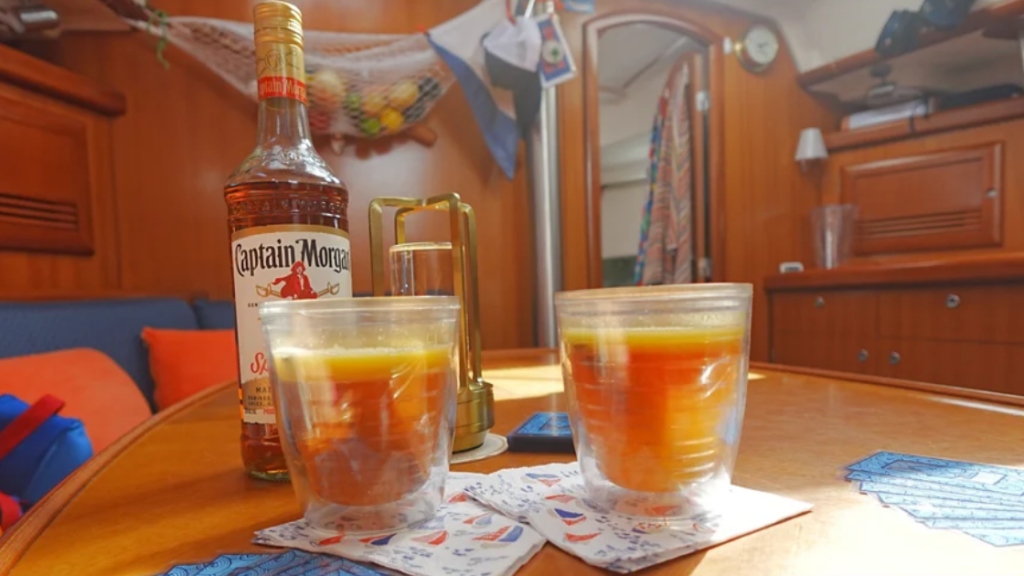
Plan hearty meals and drinks! Soups, chili, and other warming cool-weather favorites will be big wins keeping your crew warm. The same goes with hot drinks – hot chocolate, warm cider, coffee, and tea all help. Though the caffeine isn’t the best for sleeping…
And then there is the perennial cool-weather sailor’s favorite: Hot Buttered Rum.
There are several good recipes online, but you can also make this easy, low-fuss drink that warms you from the inside out as you enjoy the end of the day.
Hot Buttered Rum
Ingredients for a single mug:
- 2 ounces of dark rum
- About four ounces of hot water
- Butter, up to one tablespoon
- Brown sugar, 1-2 teaspoons to taste
- Vanilla extract (a splash)
- dash of cinnamon (ground), and a stick for garnish if you want to get fancy
- dash of nutmeg
- dash of ground allspice
Put everything but the hot water into a mug and stir or muddle it together. Bring the water to a boil, then add to the mug and stir it together until the butter melts. Feel free to adjust proportions and spicing to suit; some like it with more sugar or spices.
Quick shortcut version: McCormick’s “Apple Pie Spice” at your grocer is a blend of cinnamon, nutmeg, and allspice. So if you get a little jar of that, you only have one spice to deal with on board. Just add a hard shake or two to the mug with the butter, sugar, rum and vanilla.
The recipe we use is based on one from The Spruce Eats adjusted to our tastes.
At the end of that recipe are instructions for making the drink “batter” up in bulk, in advance. With that, when you want a drink, you just add a dollop of premixed batter and rum, then put in the hot water. We highly recommend this if you’re serving a crowd. It also keeps well in the refrigerator for a few weeks.
Some may view this as a critical winter survival technique while we wait for boating season…

Leave a Reply