
Must Visit Destination: French Polynesia
December 17th, 2025 by team
by B.J. Porter (Contributing Editor)
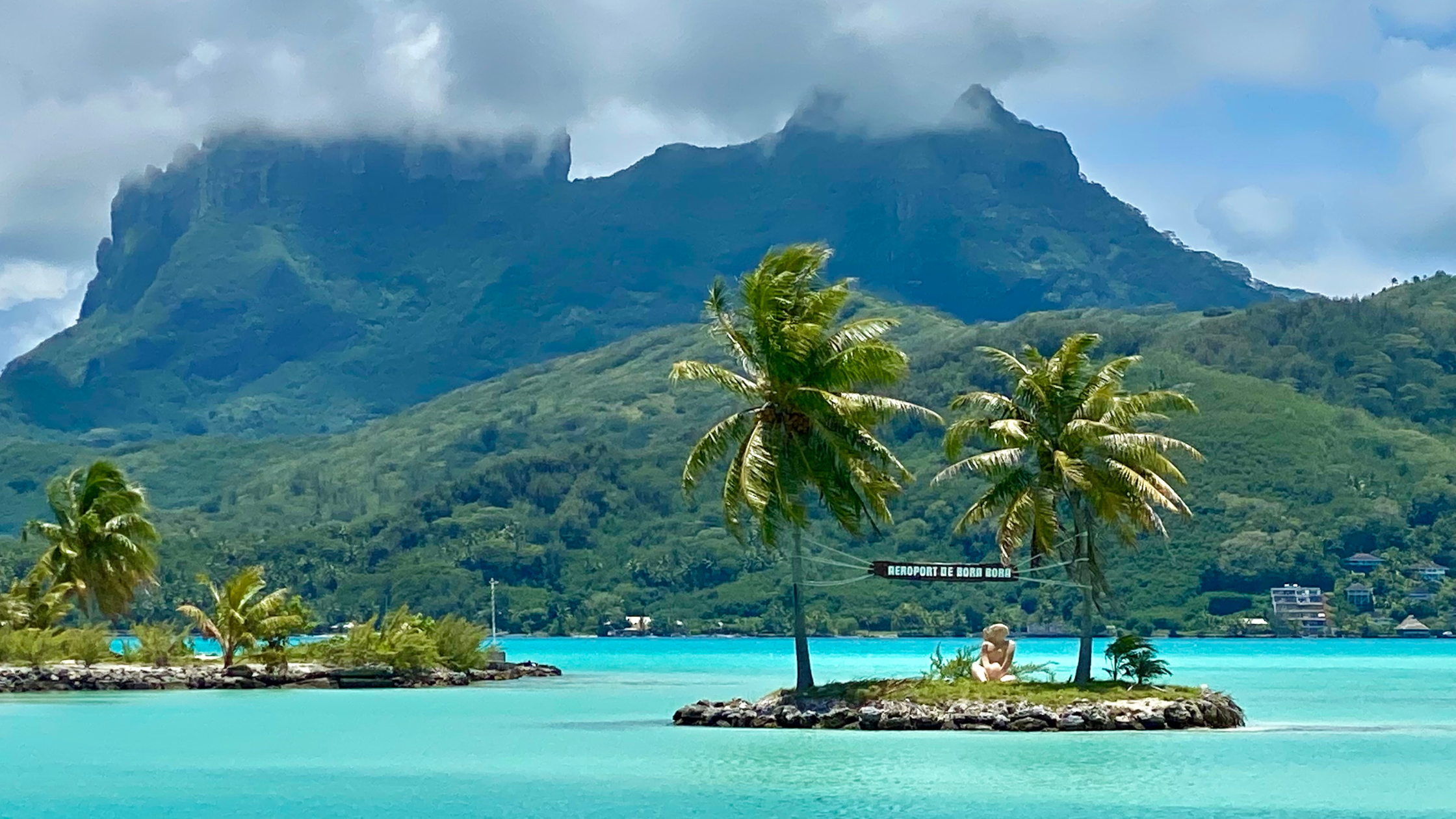
Tahiti. Bora Bora. Names that evoke wanderlust and dreams of idyllic vacations on pure white beaches on crystal clear waters. You can sail, snorkel, dive, and surf in some of the most pristine waters of the world. Who hasn’t dreamed of a vacation some place the water is so clear you can watch the anchor settle in forty feet of water?
French Polynesia is far away from it all, and getting there from North America or Europe takes a fair bit of travel. But it’s worth the effort, and sailing those waters is like no other experience.
What and where is French Polynesia?
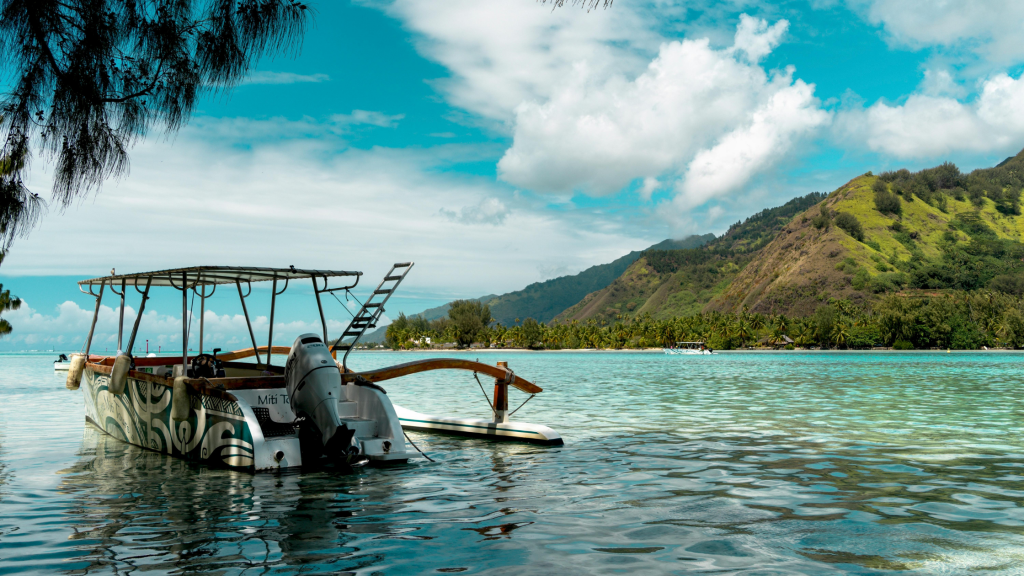
French Polynesia is in the South Pacific, east of Fiji and about 3,000 miles west of the Galapagos. It has over 130 islands and countless islets or motus spread over thousands of square miles of ocean in five major island groups. Tahiti and Bora Bora – the islands known to most outsiders – are just two of many islands you can visit.
The five major island groups are the Society Islands, Marquesas, Tuamotus, Austral, and Gambier islands. Each cluster of islands is a few hundred miles from other groups, though you can sail between them, even on a charter. The major population centers are in the Society Group, followed by the Marquesas. The Tuamotus, Australs, and Gambiers are archipelagos of sparsely populated coral atolls, far from the beaten path.
French Polynesia is a overseas collective of France, a semi-autonomous governing unit that is part of the larger French government. So it is part of the French sovereign state, but still has its own regional parliament and president. France has controlled this region for almost two hundred years, so the French language and culture are dominant, set against a blend of Polynesian languages and cultures.
It helps if you speak French, but most tourist-centric businesses have staff with some English available. So you can get by pretty well with a translation app, and maybe a phrase book if cell coverage is spotty.
French Polynesian Geography
Almost every island in French Polynesia has a barrier reef and a lagoon around it. The islands are primarily volcanic, with tall craggy mountains in the middle, and with most of the population living around the coasts. These coral lagoons usually have clear water and plentiful fish and wildlife, and offer excellent snorkeling and diving.
The more remote archipelagos of the Tuamotus, Austral, and Gambier islands are primarily atolls rather than islands. These are low-lying, ring-shaped islands with a central lagoon but no big island in the middle. The water clarity in the atolls is stunning, and the profusion of underwater life is like no other. These atolls aren’t easy to get to, but are absolutely worth the visit.
A coral atoll is usually a collection of motus, or little islands and islets, strung together. And there will be motus in and near the barrier reefs around the larger islands.
Sailing in French Polynesia
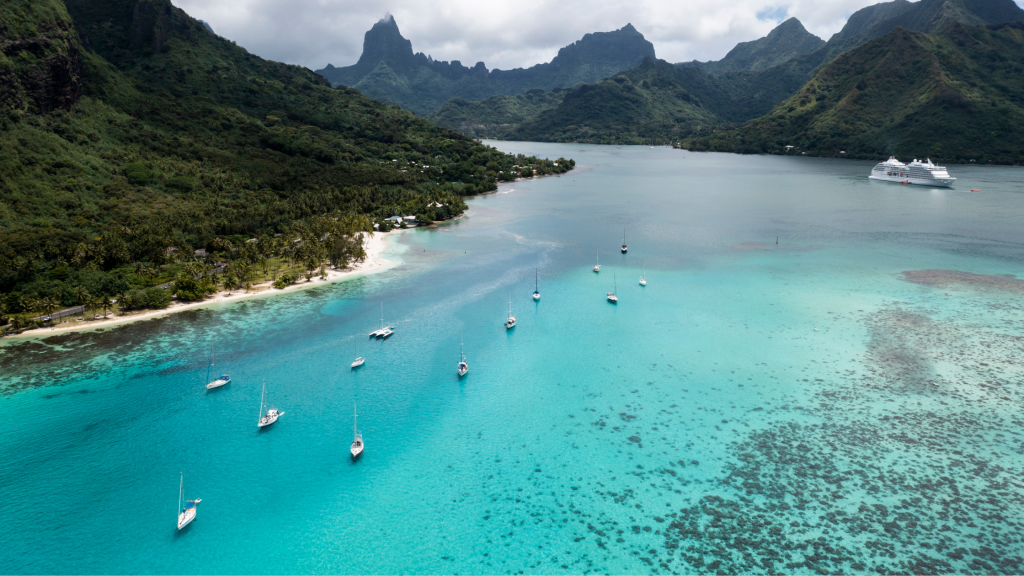
There are two primary ways you can sail in French Polynesia – charter a boat, or sail there on your own or someone else’s boat. Sailing to French Polynesia can be a life-changing experience, and is worth doing if you can arrange a sabbatical or a break from land-bound life. But it’s a topic for another article, since it’s an enormous undertaking that will take a month of your time at a minimum, or several months if you really want to do it right. (If anyone wants to see that topic in the future, please let us know in the comments!)
Most charters start from Raiatea in the Society Islands. Raiatea shares a lagoon with Tahaa, and you can easily spend a week just exploring inside the lagoon. But you won’t want to, because Bora Bora lies to the west in full view and you can’t miss it. The lagoon is so blue and green that it changes the color of the clouds as they pass over the island.
Past Bora Bora is Maupiti, with a tricky entrance that’s well worth the challenge. To the east, you’ll find Huahine, another island worth a visit. There are a few other, smaller atolls near Raiatea, but they are restricted access, or quite difficult to get into.
Some itineraries out of Tahiti can take you to Rangiroa or other atolls in the Tuamotus, but that’s a lot of sailing and may require a captain with strong local knowledge. The atoll passes in the Tuamotus can be treacherous and require careful planning and timing. While much of the sailing is pretty easy, there are a lot of reefs and passes you will need to negotiate to get in and out of any lagoon.
If you start a charter from Tahiti, there is still plenty to see and do around Tahiti and Moorea. And a sail to Raiatea and Bora Bora is only overnight.
What you can see and do
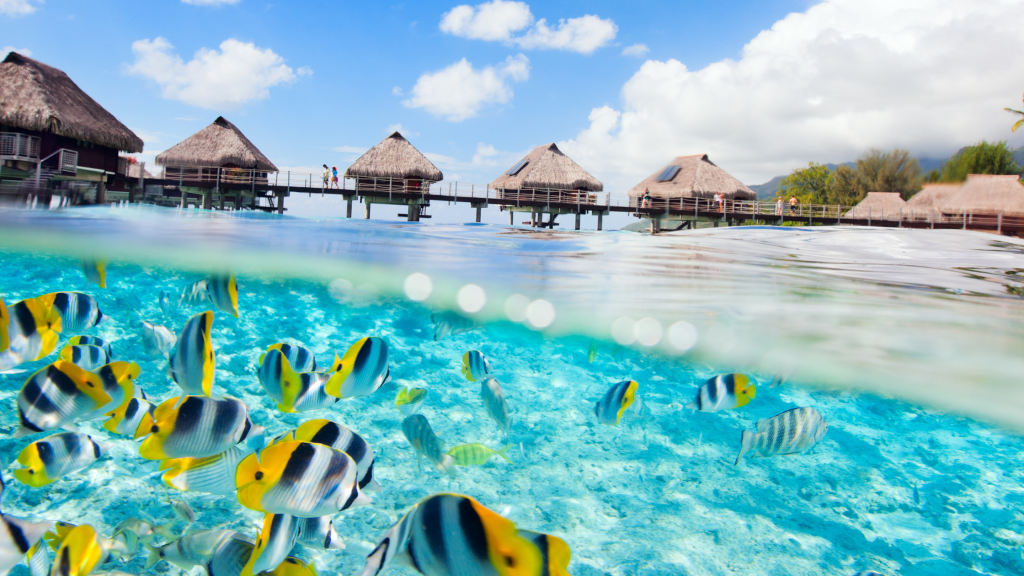
With crystal clear waters and gorgeous coral reefs, snorkeling and diving are always outstanding. You’ll find interesting underwater sights almost everywhere, though some locations are better known for certain types of wildlife, and the remote areas are often better than busier areas closer to resorts. Be prepared to see sharks, rays, sea turtles and dolphins besides the all coral and stunning reef fish.
Beyond snorkeling and diving, there are so many other things to see and do in French Polynesia. Cultural experiences are a highlight, and you can find many restaurants and dinner theaters with shows highlighting Polynesian music, dance, history and local legends. You might even find a cultural show in a more intimate setting, where you get to learn the dances or try your hand at learning to open a coconut in seconds like the locals do.
The food throughout the country is excellent, and you’ll find many local specialties, from poisson cru, a Tahitian take on ceviche using lime juice and coconut milk, to variations on French cuisine influenced by local flavors and spices. Since French Polynesia is a source of much of the world’s finest vanilla, you will experience it in some excellent dishes you might not expect. Mahi-Mahi in vanilla sauce was one of our favorites.
You can also tour vanilla plantations and pearl farms, visit historical sites with petroglyphs and ancient structures, and of course find some interesting shops and restaurants in any port.
And if you time it well, you can catch the Heiva i Tahiti, which is a month-long festival of Tahitian culture and sport. While the competition culminates in Tahiti in mid-July, it’s a country-wide event through the month, with teams of dancers holding regional competitions in bids to represent their home in the big event in Tahiti. There’s plenty of dance, food, music, and athletic competitions, and you can join in and learn.
Getting there and when to go
The Southern Hemisphere summer months are November to April. Although you can head there then, the locals call it the “rainy season” for a reason. There is a lot of rain and unpleasant weather, including a risk of cyclones. Unlike the Caribbean, it’s not a great getaway to dodge the snow and ice in North America because the timing is all wrong. The best times to be in French Polynesia are from May through October during the milder winters, and July in particular if you want to catch the Heiva. In winter, you’ll rarely catch more than a quick rain shower and will have lots of warm and sunny days.
Flying there from anywhere is arduous. The flight time from San Diego or LA is about nine hours, and you still have to get to California. The only international airport is in Papeete, on Tahiti.
First you fly to Tahiti, then catch a local flight to the other islands. The good news is those flights are pretty short, but you should plan for a night in Tahiti on either end if you can’t work out the international connections.
It’s a lot of effort to make the trip, but is it worth it? Absolutely. Just don’t plan your trip too short, because you will not want to leave.

December 23, 2025 at 7:54 pm, james Stanchfield said:
Loved this article, very informative, Makes me feel Iam there. I would have Seasonal info a plus. keep them coming