
Boat Fire Safety: Prevention and Emergency Tips
August 5th, 2026 by team
by B.J. Porter (Contributing Editor)
One of the biggest nightmares on a boat is a fire. Not only is there the perfectly normal fear of dangerous fire, but you’re on a boat in the water with nowhere to go! Fire safety is a crucial part of boating, and with a good plan and the right safety gear, you can reduce the chance of a fire and increase your ability to control one if it happens.
Yes, it’s a dark topic, but it’s not one we’ve delved into deeply because your usual emphasis is on the fun and rewards of boating and how to make boating better. But paying a little attention and putting some thought into fire safety will make your boating experience better.
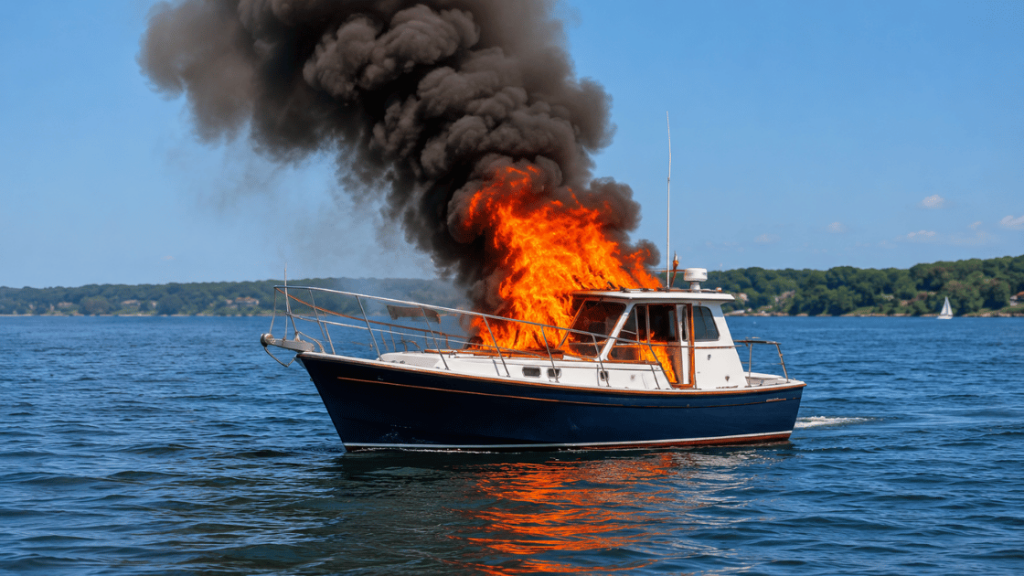
What’s your fire plan?
Have you ever sat down and really thought about what you’d do if your boat caught on fire? If you’re not on the boat, of course there’s not much to be done. But what if it happens when you’re underway, or at anchor, or in a marina? Do you know how you’d respond?
What’s in a plan?
Mostly, your fire plan is like a fire plan for your house. Except you might have to get into the water instead of climbing out a rope ladder from the second floor. To have an effective plan, you need to know:
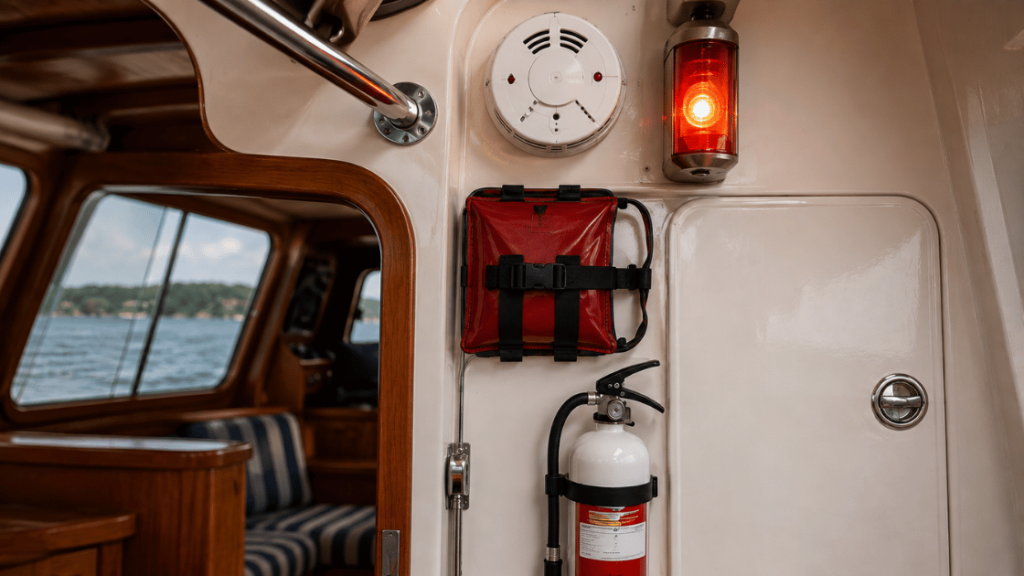
- What firefighting gear is on hand? This usually includes portable fire extinguishers, but may include blankets, water pumps, and buckets.
- Where the firefighting equipment is. You may have to find it in the dark, and you need to know if you can get to it.
- How to signal a fire on board. If people are sleeping, you need to wake them up.
- Your exit plan from the boat for all spaces. Think of other ways out if one escape route is blocked.
- An abandon ship plan if you can not control the fire.
Having a plan is mostly a matter of mental preparation. The expectation isn’t that if you smell smoke, the first thing you do is go find a laminated copy of the plan in the nav station and start ticking off boxes.
The real importance of a fire plan is that you’ve thought everything through and talked about it. So if you see flames or smell smoke, you have some idea of the steps you should take. Even if you’re not checking them off a card, you are familiar with the steps needed to deal with a fire emergency.
Suggested Actions
While everyone’s fire plan will be different, there are a few common elements every plan should include. The specifics for your boat may be different based on the equipment, space, and people you have on board.
- Wake up/alert everyone. It’s critical that everyone knows immediately that there is a fire. This is often a horn or loud signal, especially at night.
- Identify where the fire is.
- Call in a Mayday. If you get the fire under control, you can always call the Coast Guard back and tell them. But precious seconds lost before you make a call may mean you don’t get to make a call. No call, no rescue.
- Determine the type of fire, if possible (see below for A, B, C, or D)
- If safe, use fire extinguishers to control the fire and put it out.
- If moving, turn the boat to put the fire downwind to slow its progress on the boat.
- If you cannot control the fire without injuring someone, abandon ship.
- Whoever is not fighting the fire should grab PFDs, ditch bags, and safety gear and ready any lifeboats or dinghies.
The overriding priority of the plan is the safety of the people on board. Boats are replaceable, but people are not. No one ought to endanger their lives to save anything except another person.
Fire Basics
Fire is loud, hot, fast, and scary, and there’s a lot more to know about it than we can get into here. But there are a few things you need to understand in order to fight and stop a fire safely and effectively.
The Fire Tetrahedron (and triangle)
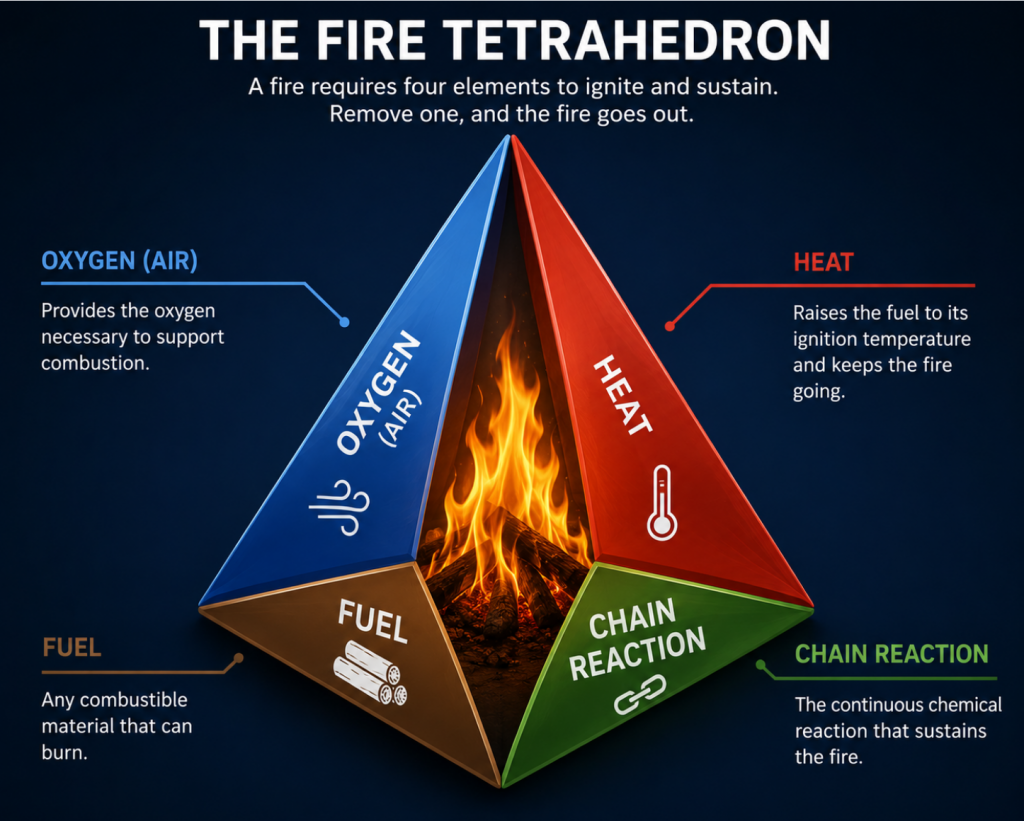
Fire needs four things to continue burning:
- Heat
- Fuel
- Oxygen
- A chemical chain reaction
An early representation of the “Fire Triangle” didn’t include the chain reaction, but updates to our understanding and fire suppression techniques now include this fourth piece.
To put out a fire, you get rid of one of the four legs of the tetrahedron. Cut off the fuel, smother the oxygen out, cool it with water, break up a chain reaction with a chemical. All these are ways to stop a fire quickly.
This is the fundamental concept used in different firefighting techniques to stop fires.
The ABCs of Fire Types
Four primary types of fires are categorized by letters. Each type of fire is fought differently, and using the wrong firefighting technique can make some fires worse.
Type A – solid fuel fires, like paper, wood, fiberglass, rubber, plastic, and other non-liquid fires. Water can often extinguish these fires, and a hard spray disperses the fuel and cools it.
Type B – liquid and gas fires, like oil, grease, fuel, teak oil, paint thinners, alcohol, and other flammable liquids. Water can make these worse, as it doesn’t mix with most fuels and can make the fire spatter and spread. Dry chemicals and foam are the best extinguishers.
Type C – Fires in energized electrical equipment. These are common on boats, and water-based firefighting can be an electrocution hazard and possibly make the fire worse. Turning off the power can shift this to a Type A; otherwise, use a Type C extinguisher.
Type D – Flammable metals, like lithium and titanium. These are intensely hot fires, and very difficult to put out without specialized equipment, usually a dry powder or sand to smother and absorb heat. This equipment is uncommon on most boats. If you plan to install lithium batteries on board, explore this topic further.
What does this mean to you? It means you need to have the right technique and extinguisher on hand to fight the right type of fire. Labels on fire extinguishers, such as B, BC, or ABC, indicate the types of fires they are suitable for. Types B and BC extinguishers are most common on boats.
While Type ABC extinguishers are the best choice for any fire because they don’t worsen it, with one drawback. The dry chemical in them can damage equipment and boat interiors. But that is still better than burning to the waterline.
Fire Safety Gear
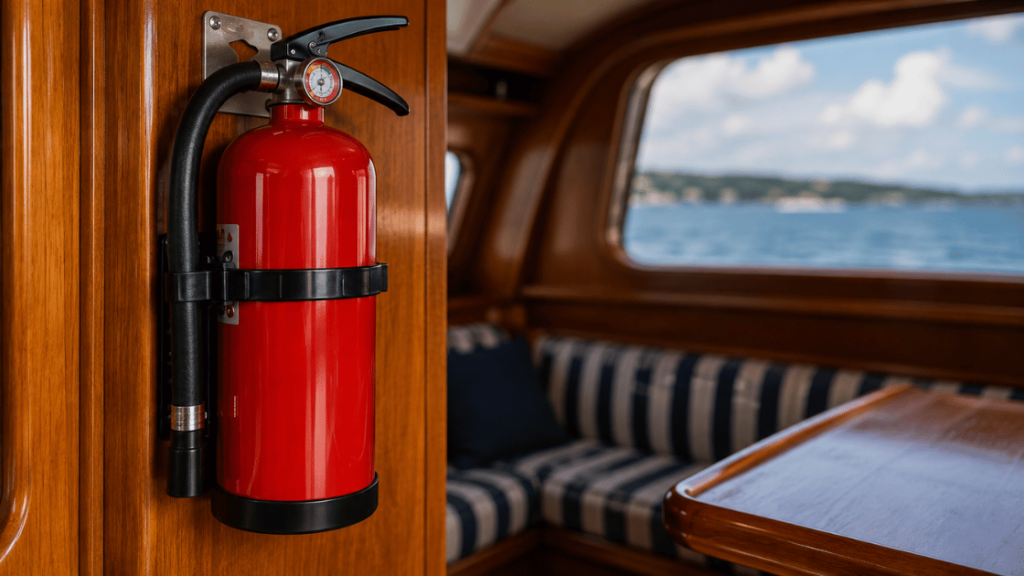
How much fire safety equipment do you need to be safe? The U.S. Coast Guard has a minimum required list of equipment for small vessels, including fire extinguishers. This list is, as described, a minimum. And it is very minimal and may not always be adequate for full fire safety.
The Coast Guard Minimum
Based on the size of your boat, you may be required to have up to three Type B fire extinguishers approved for marine use for boats below 65 feet.
That’s pretty much it. There are a few variations about whether you have an engine room system or if you have a larger Type B, but it’s not very much gear. A two-pound handheld extinguisher fully discharges in about 8-10 seconds of firefighting, and that doesn’t buy you much time.
What you really want in fire extinguishers
A good starting list for fire extinguishers includes all the commonly occupied spaces and high-risk areas.
- One two-pound type ABC extinguisher in every sleeping cabin/space.
- One type ABC or BC extinguisher in the galley.
- At least one more ABC or BC fire extinguisher in the saloon or common areas, usually near the nav station, companionway, or electrical panel.
- Either an engine room fire suppression system or a CO2 fire extinguisher to target the engine spaces, ideally through a small hole or port.
While BC extinguishers are less expensive, the price difference between a BC and an ABC is not large. Water is good for type A fires, but it won’t likely be the first thing you put your hand on if you smell smoke. So think about spending a bit more on the ABC.
Alarms and sensors
Besides fire extinguishers, smoke detectors can save your life and your boat. They should be suitable for a marine environment and get new batteries at the start of every season if not hard-wired.
Engine suppression systems
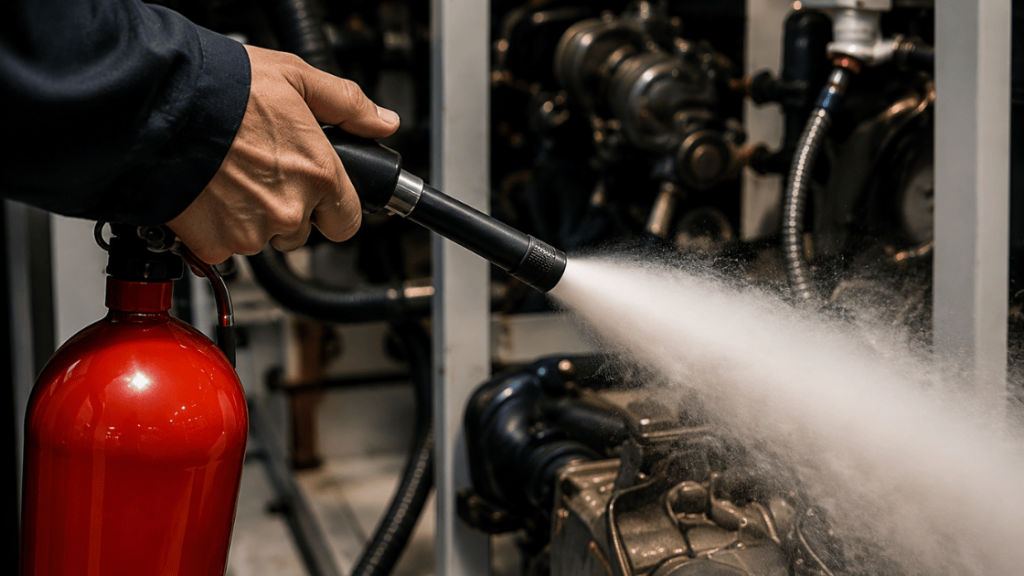
Chemical extinguishers don’t work so well in engine room spaces where you can not see the fire to get the chemicals to the base. And worse, opening an engine room door to look for a fire or shoot a chemical in can let in a big draft of fresh air that causes the fire to grow rapidly.
Permanently installed engine room suppressors and use a chemical blanketing or carbon dioxide suppressor to stop engine fires in the enclosed space without allowing in that big rush of fresh oxygen.
Some engine rooms may have a fire port, where a directed carbon dioxide extinguisher can be discharged without adding more oxygen to the fire. Without an engine room system, any engine room fires may quickly escalate out of control if you open the space.
Blankets, buckets and other devices
A fire blanket in the galley is a key piece of safety equipment. It’s a non-flammable blanket to smother flames, and the quickest way to put out a small galley fire. Or to smother clothing fires on a person.
Buckets for fetching seawater are handy, though most freshwater systems would take too long to be useful against a growing fire. A bucket should have a stout lanyard on an equally stout handle, so you can toss it in the water and lift it out again.
Firefighting vs. fleeing
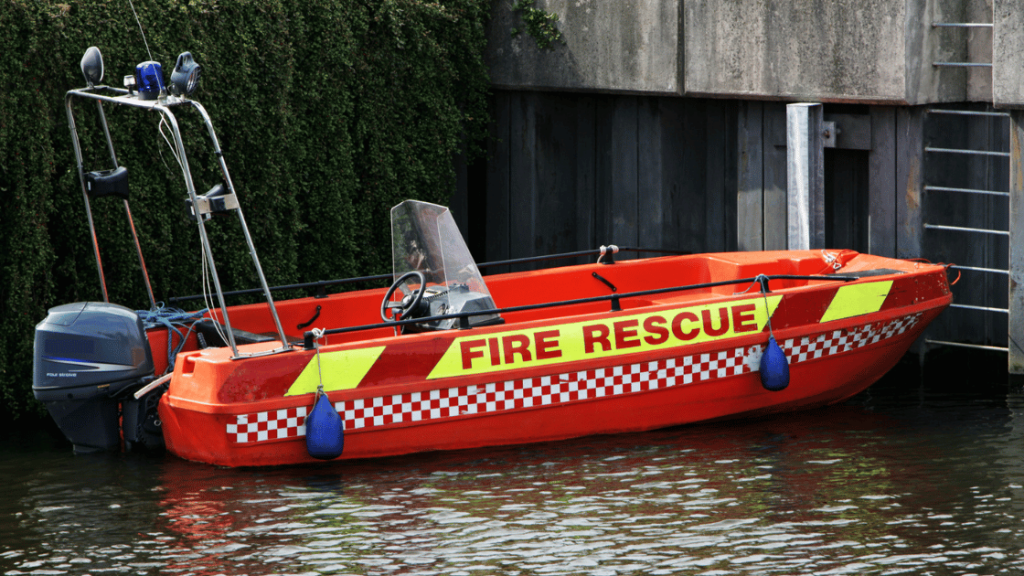
The fight-or-flight response to a fire is very real, and a common mistake people make is to try too hard to put out a fire with inadequate tools. The priority is always saving lives; saving the boat is less important.
So when is it a good idea to fight a fire? Only if you have a reasonable chance of success without putting yourself at risk.
- A fire should be small and contained. Something you can put out in under two minutes before you need to get to safety.
- You need to know the type of fire, and you must have the proper firefighting equipment in your hand.
- You can operate a fire extinguisher.
- You have an escape route away from the fire. Never head into the boat and get yourself cut off by the fire. Always watch your back.
- You are not at risk of being overwhelmed by noxious fumes. There are a lot of things on a boat that release dangerous chemicals when they burn.
If you do not think you can fight the fire in these conditions, do not. Get everyone off the boat and call for rescue.
Fire prevention – the real key
The best way to fight a fire is to not have one. Taking care in how you operate the boat and store and dispose of flammable materials is a major factor in not having a fire.
The most common fires on boats stem from electrical failures, cooking mistakes, engine and fuel system malfunctions, and mishandled flammables.
Electrical Fire
Seasonal and mid-season inspections of your electrical system can go a long way in reducing fire risks. Look for corroded connections, melted insulation, or other signs of weak spots in the system. If you have a breaker or fuse that keeps blowing, find out why and fix it.
Engines and fuel
Gasoline inboard boats should always run blowers before starting. Seasonal inspections of fuel systems can find leaks or corrosion in the lines early, address any problems when you find them. Pay close attention to fuel smells, avoid spills when refueling, and quickly clean any up and dispose of the waste immediately. Especially for a gasoline engine.
Safety in the galley
Cooking on a moving boat takes extra care to avoid burns and spills. But the chance of fire is higher, too. The same safety rules apply to cooking on a boat as at home, but if you cook with electricity at home, don’t forget you usually have an open flame on a boat!
Secure pans on gimbaled stoves, and avoid frying spattering foods while moving.
Finally, make sure you have a working solenoid on your propane supply, and turn off the gas when you aren’t using it.
Spares, rags, and chemicals
Most of us have some project chemicals on the boat in a locker somewhere, and a few spare rags used to check the oil and wipe up spills in the engine room. Those thinners, solvents, varnishes, and paints are highly flammable. If the cans corrode or they leak, you have a ready source of fire.
And oil-soaked rags are a real fire risk, so store them outside the engine room and replace them before they pick up too much oil.
Final Thoughts
Boating is supposed to be fun, and everyone wants to think about and do the fun stuff. And safety is never really fun, and thinking about it is downright grim sometimes.
But we need to do it. A couple of not-fun hours being prepared can save you pain, money, and heartache; it’s worth it. And a few well thought out updates to your fire safety equipment, coupled with a fire safety plan and routine inspections, can make all the difference.

Leave a Reply